
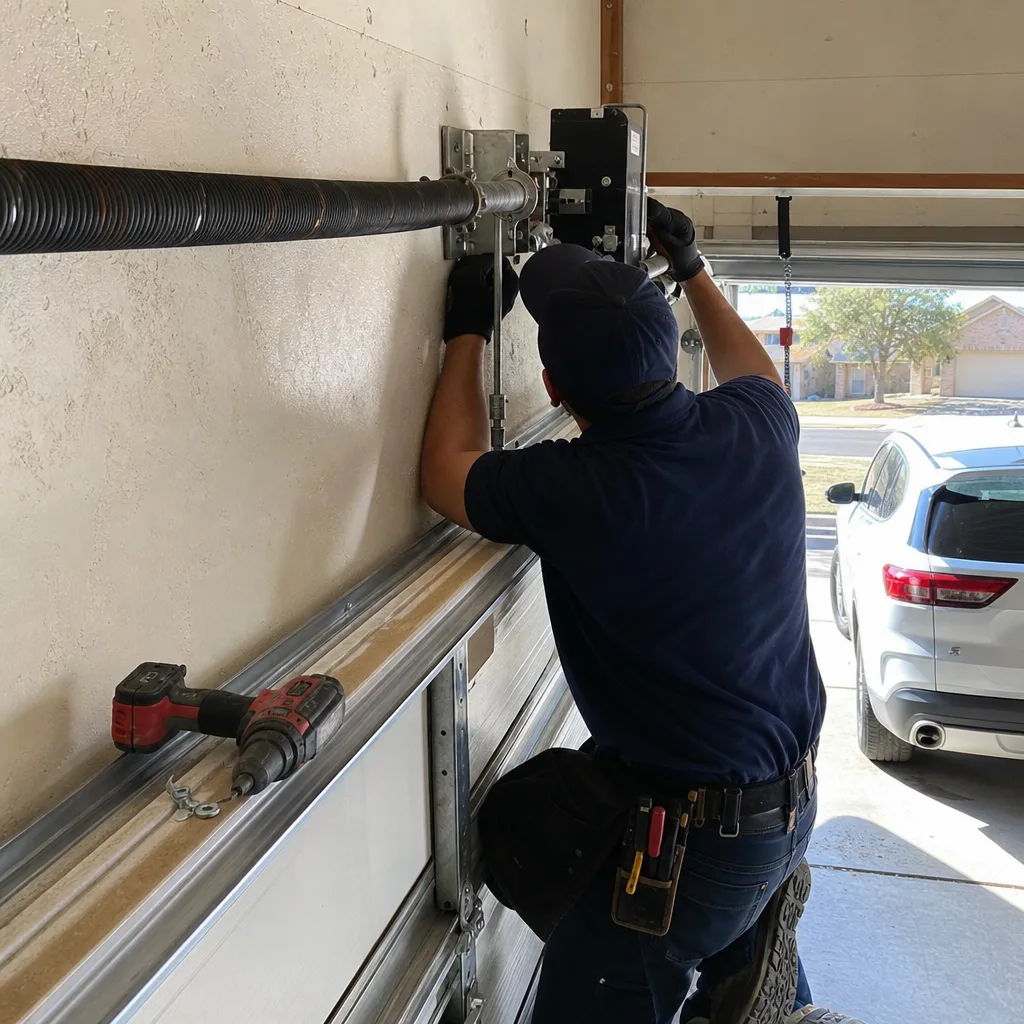
Last updated November 15, 2026
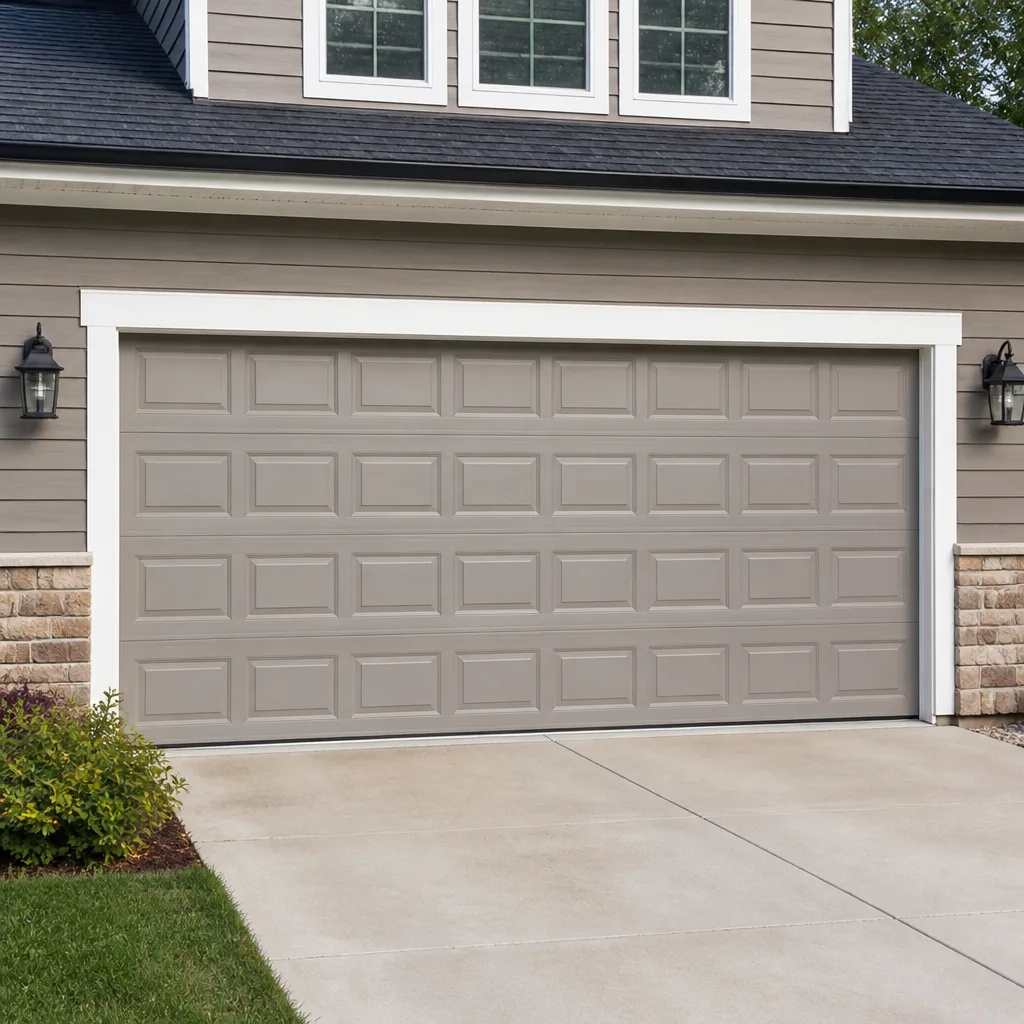 Raised-panel steel
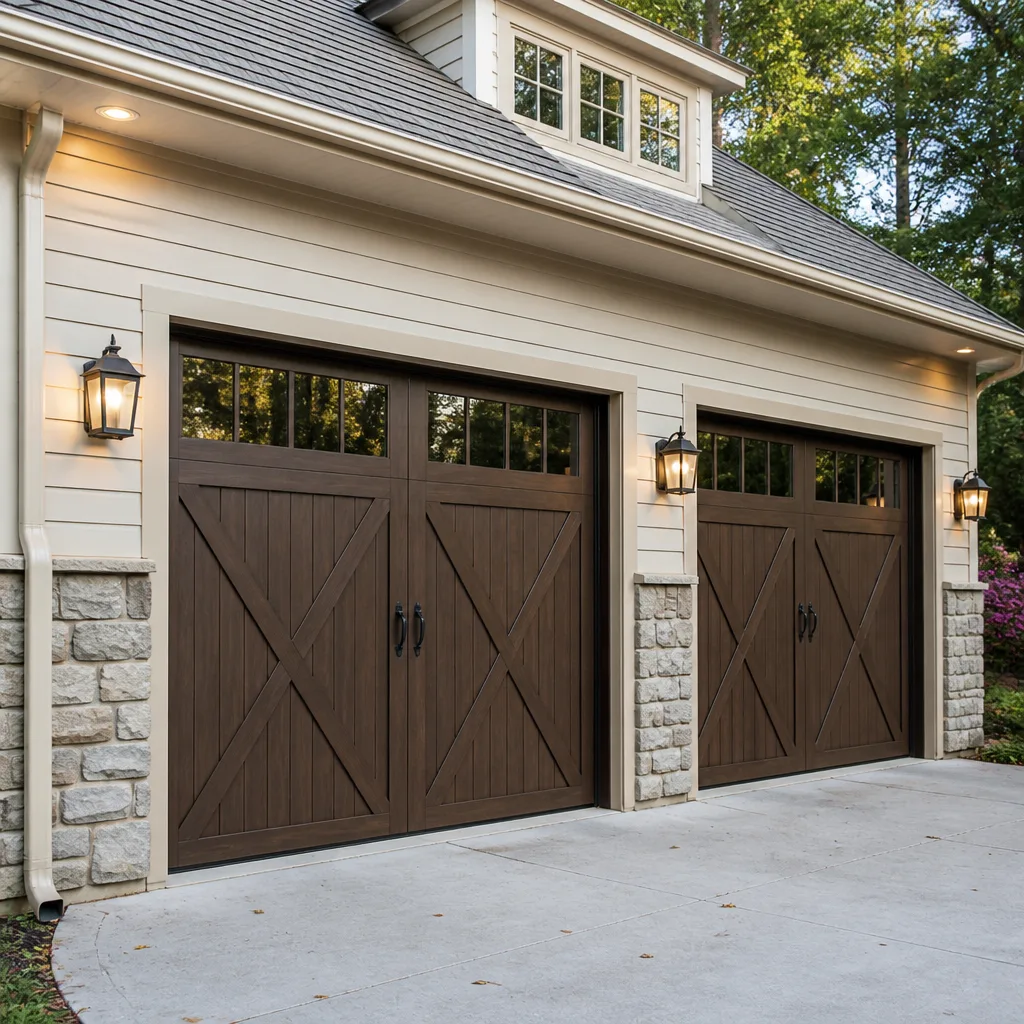 Carriage house
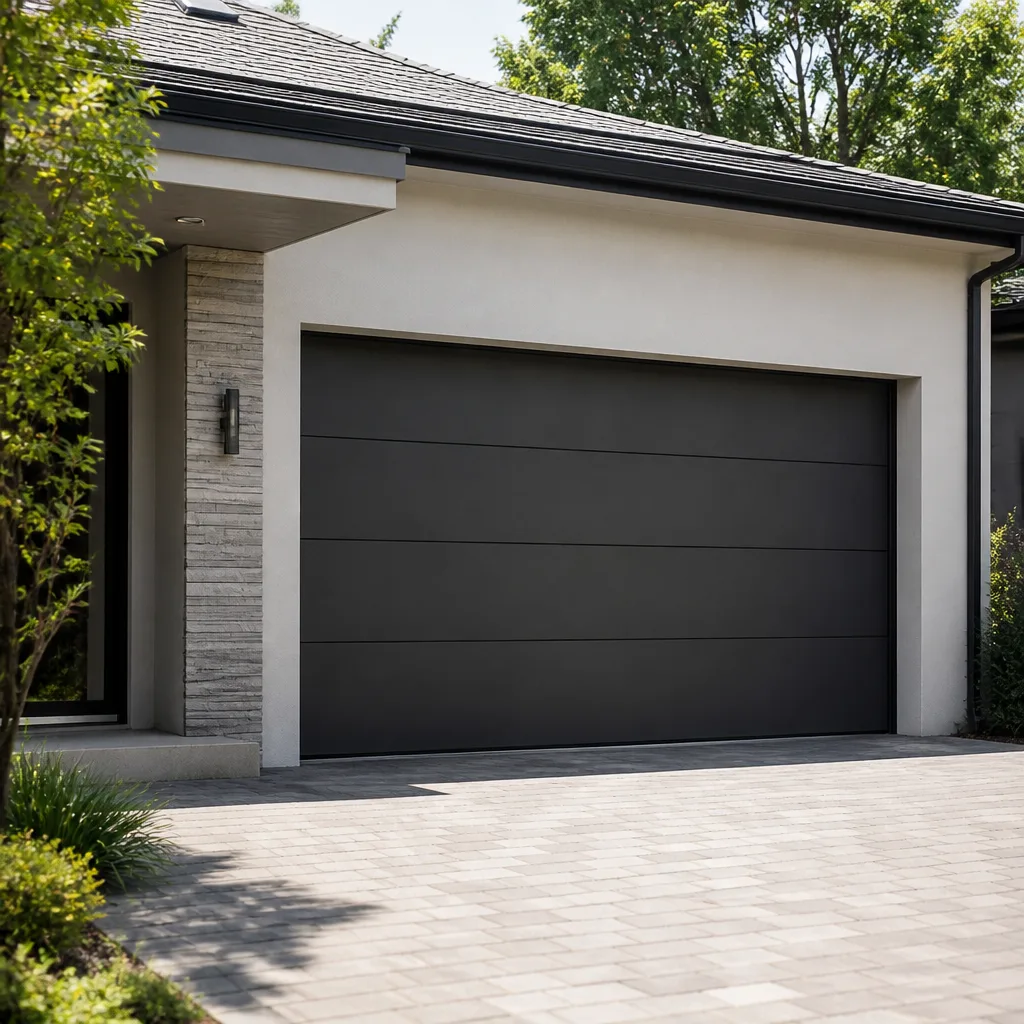 Modern flush
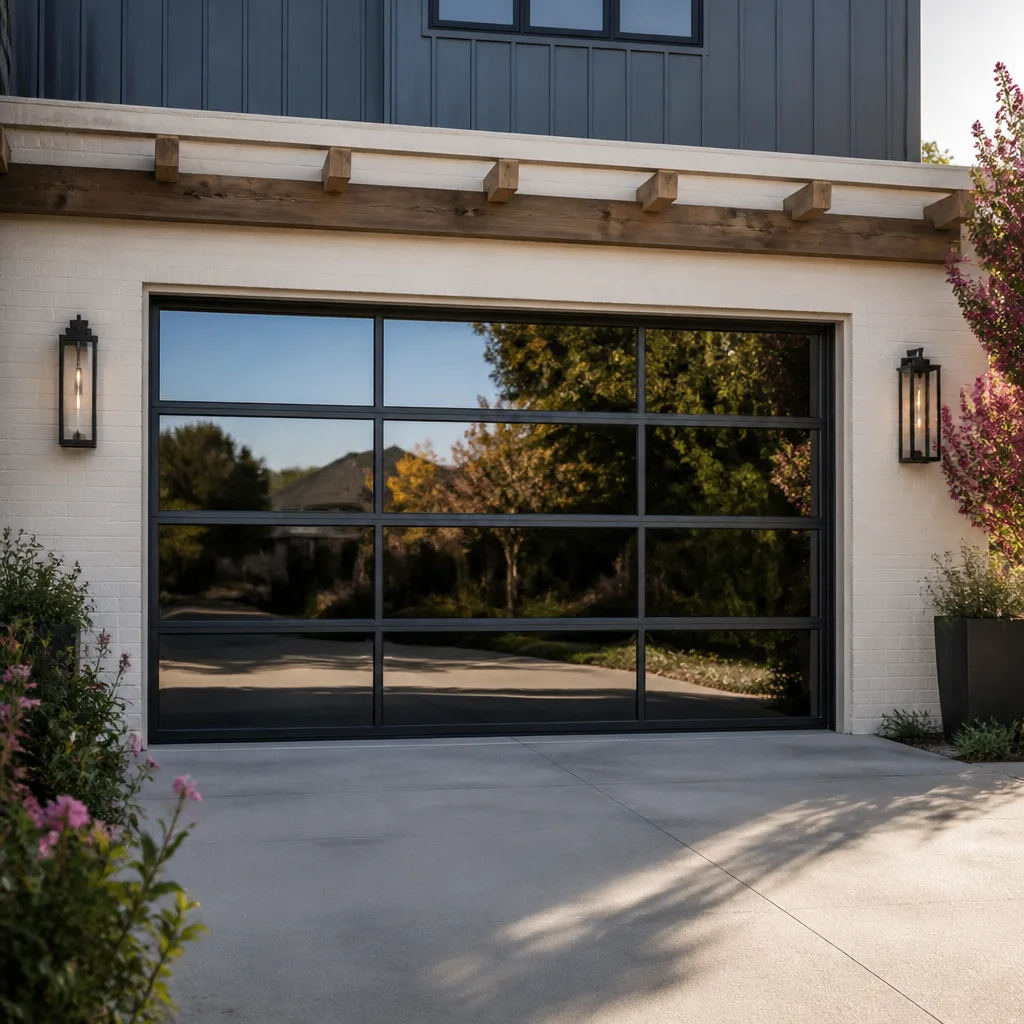 Full-view glass
 LiftMaster openers
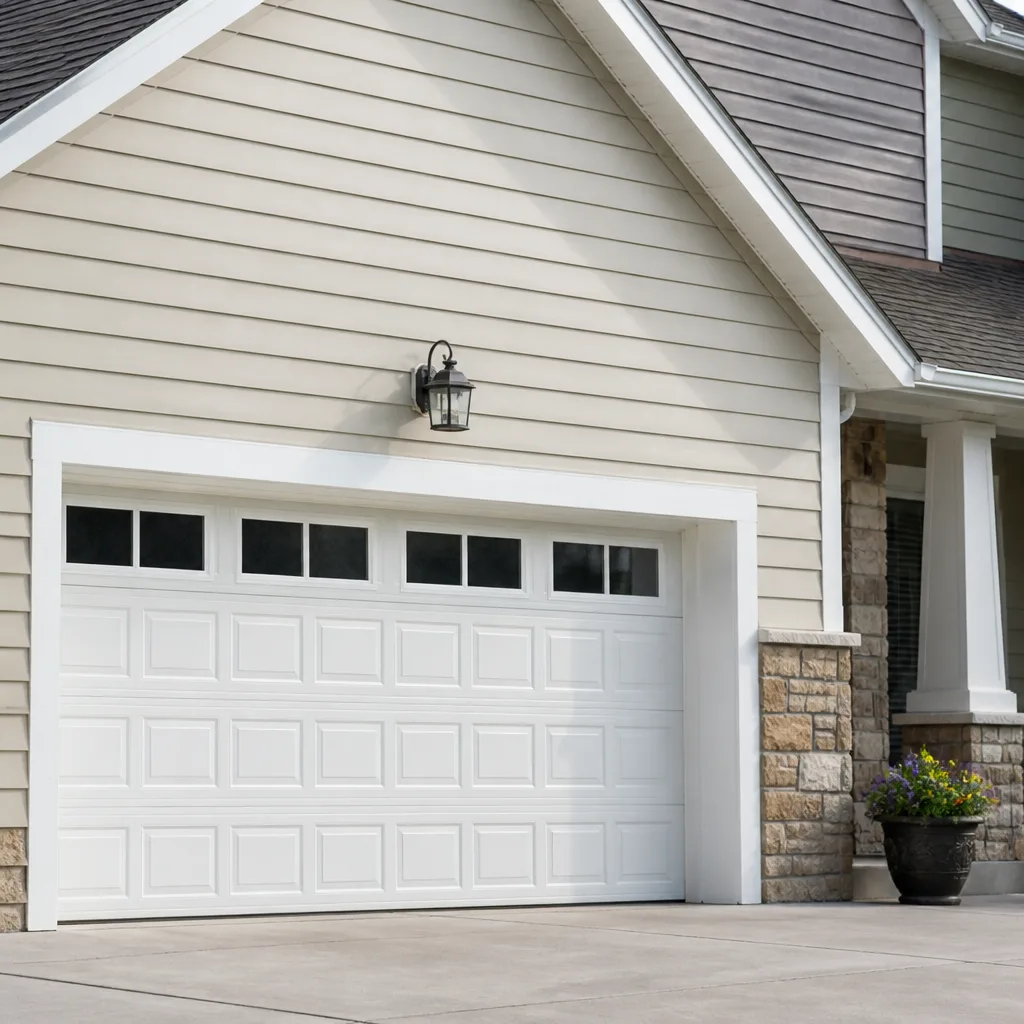 Chamberlain openers
Full 25-point door and opener safety check with every visit - springs, cables, rollers, tracks, and your LiftMaster or Chamberlain opener included
You get a price before we start. It does not change when the pro arrives.
Get your free estimateGarage Door Warning Signs: A Lubbock Homeowner’s Reference Guide
Most homeowners call us after the door stops moving. By then, the warning signs have usually been talking for weeks. Garage doors rarely fail without notice. They groan, they drag, they hang a little crooked, and they get blamed on the weather long before anyone thinks to look underneath. Here in Lubbock, that delay is especially common because dust, sun and hard-water irrigation quietly age a door in ways that don’t show up on the surface. This guide walks you through the signals worth acting on, which ones mean “fix it this weekend” and which mean “call today,” and a simple routine you can run in your driveway in about a minute a month.
Quick Answer
The main garage door warning signs are unusual noises (grinding, snapping, rattling), a door that moves unevenly or reverses before closing, visible rust, sagging panels or a frayed cable, and an opener that runs longer or slower than it used to. In Lubbock, dust-packed bottom seals, UV-bleached panels and rust patterns from irrigation water are the local signals homeowners most often miss. Any sign involving a snapped spring, a hanging cable or a door that won’t stay up is a same-day call, not a wait-and-see.
Styles & brands we work with
- Raised-panel steel
- Carriage house
- Modern flush
- Full-view glass
- LiftMaster openers
- Chamberlain openers
Table of Contents
- What Your Door’s Noises Are Telling You
- Visual Warning Signs in Lubbock’s Environment
- Opener Behavior Changes That Point to Door Problems
- An Off-Level Door vs. a Failing One
- The 60-Second Monthly Self-Inspection
- How Lubbock’s Seasons Change What You Should Watch For
- Repair or Replace? How to Decide Honestly
- What Not to Touch Yourself
What Your Door’s Noises Are Telling You
Noise is the earliest and cheapest warning your door gives you, but not all noise means the same thing. Learning to separate “lubricate now” from “call today” saves a lot of money.
Start with the sounds that mean maintenance. A light squeak or a dry groan as the door opens usually points to rollers or hinges that need lubrication, not replacement. In Lubbock, where wind carries fine dust and grit, these parts dry out faster than in places with more humidity. A door that squeaks more in dry weeks than after rain is a strong sign it’s lubrication, not failure.
Then there are the sounds that mean stop. These include:
- A sharp snap or bang from above the door. That’s usually a torsion spring breaking. The door becomes unsafe to operate and should not be forced open or shut.
- Grinding that gets worse over several days. Worn rollers, a dry bearing plate or a misaligned track can cause this. Ignored, the grinding chews up the track and can twist a panel.
- Rattling that grows louder. Loose fasteners, a worn hinge, or a track pulling away from the wall frame. In Lubbock’s dry, hot summers, wood framing moves a bit and fasteners back out over time.
- A hard clunk at the end of travel. Something is out of adjustment, or a stop point is being hit. That stress adds up and can crack a panel over time.
As a general rule: dry squeaks are a maintenance item; grinding, snapping and violent rattling are a call. Our technicians have up to 13 years of experience, and the first step is always diagnosis. We want to know what’s making the sound before we quote anything. If you’re hearing something you can’t place, our team handles garage door repair around Lubbock and can tell you what it means over the phone.
Visual Warning Signs in Lubbock’s Environment
Some warnings you can’t hear. You have to look. And here in Lubbock, the visual signals look a little different than in wetter parts of the country. The combination of intense sun, wind-blown dust and hard-water irrigation leaves its own signature on a door.
Sun-bleached panels hiding cracks. Lubbock’s summer sun is intense, and it fades paint and stains unevenly across the door. Fading itself is cosmetic. The problem is that faded areas can mask hairline cracks or crazing in the panel surface. Once a panel starts cracking, water and dust get in and the crack grows. If you run your hand across a faded section and feel a raised edge or a rough line, that’s worth a closer look.
Rust in the right places means different things. A little surface rust on a hinge pin is normal wear and can often be cleaned up. Rust blooming along the bottom of the door, or in streaks where your sprinklers hit it, tells you two things: hard-water irrigation is eating at the finish, and the bottom seal may already be trapping moisture. Left alone, the rust works into the panel and into the seal, which is more expensive than a cleaning and re-coat.
Dust-packed bottom seals. This is the Lubbock classic. Our spring wind pushes dust into the bottom seal, where it grinds against the floor and packs up the seal’s edges. A worn-out seal lets dust and pests under the door, which then get pushed around every time you open it. Run your foot along the seal from inside. If it feels crumbly, compressed to a thin line, or no longer touches the floor, it needs replacement.
Opener Behavior Changes That Point to Door Problems
Here’s something a lot of homeowners never learn: the smart opener can be your best diagnostic tool, and the problem it’s warning you about is often not the opener at all. A brief slowdown or an extra strain on the motor is frequently the door’s warning about a worn spring, a dry roller or a tuning issue, before anything breaks outright.
Watch for these behaviors, and what each usually points to:
- The motor runs noticeably longer to open or close the door. This can be a tired spring, a dry or worn roller, or the door itself binding in the track. On a LiftMaster or Chamberlain, the opener compensates automatically for small changes, so a door that suddenly needs more time tells you something in the door has gotten harder to move.
- The door travels more slowly in one direction than the other. One direction needs more effort. Often a spring wear issue, not an opener fault.
- The opener struggles, then reverses before closing. It may be a safety sensor aligned poorly, or a door that binds partway down. Both deserve a look, and the second is the kind you don’t keep ignoring.
- The opener makes a clicking sound but the door doesn’t move. This shifts the focus to the opener’s logic board or drive. Opener repair is its own specialty, and we treat it that way. Whether you have a Craftsman or a Raynor, the drive system and electronics each have their own failure patterns, and we work through them rather than guessing.
We often get asked why a door “started fine” and then got worse over a couple of weeks. That’s the door warning you while it still works. Stopping to identify what’s actually failing is far cheaper than replacing an opener that was never the problem. Our dedicated garage door opener repair service is set up to sort door problems from opener problems, because both live in the same system.
An Off-Level Door vs. a Failing One
Lubbock’s temperature swings, wide swings between a hot afternoon and a cool night, move the materials in your garage door a little. That means a door that sits a half-inch higher on one side after a hot week is not automatically broken. A door that has always been slightly uneven and hasn’t changed in years is a different matter from one that is getting worse. Knowing which is which matters.
Signs the unevenness is just thermal:
- The door has always been slightly off, or it changes a little between hot and cool weather.
- It opens and closes smoothly, in a straight line, with no binding or scraping.
- The gaps on either side are small and stay roughly even as the door moves.
Signs it’s structurally failing:
- The door stops partway up, binds, or jumps its guides.
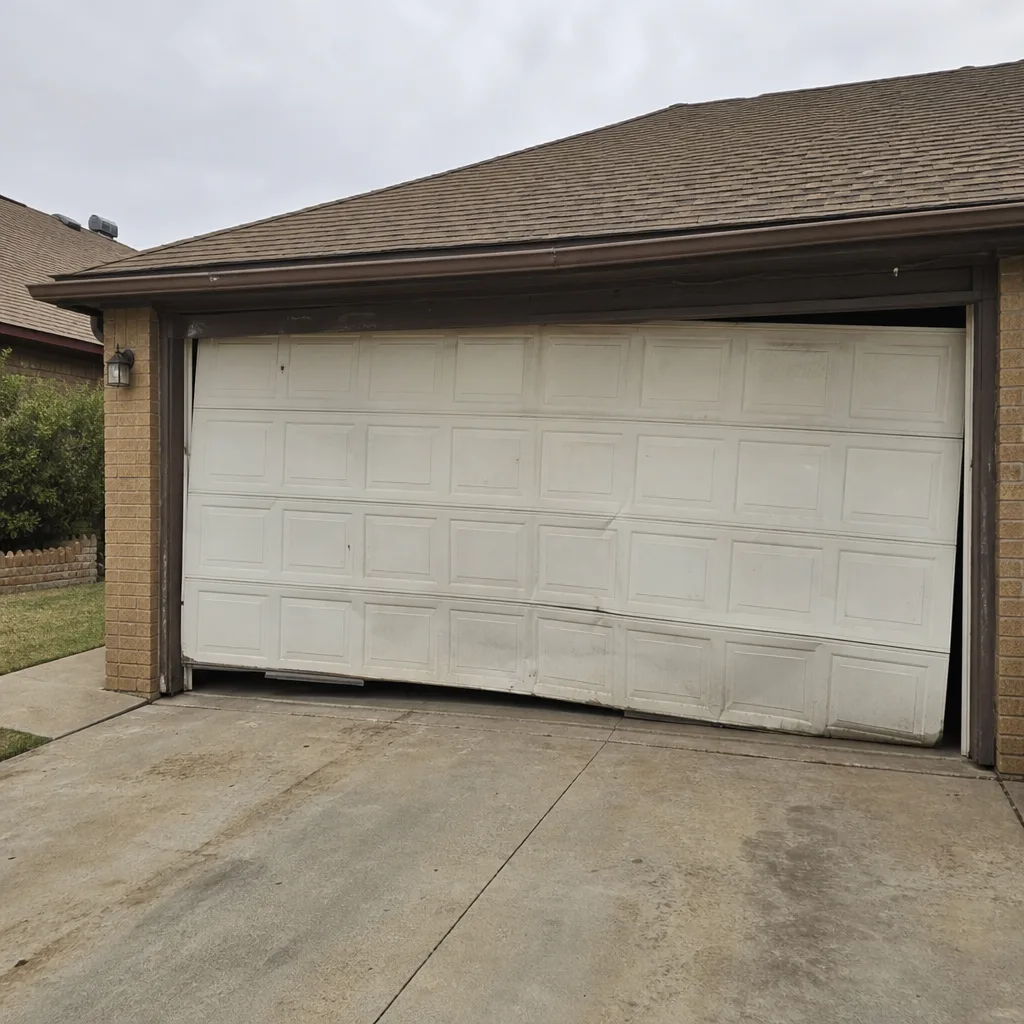
- One side is sagging more than the other, and the gap grows over a few weeks.
- Panels have bowed, bent or cracked around the hinge points.
- One side of the door rises faster than the other, or one side settles too low.
The first set is worth mentioning at your next tune-up. The second set is an urgent call, especially if the door won’t stay in the up position, because the springs or cables that hold it may be failing. If a door isn’t level in Lubbock, a technician needs to look at the springs, cables, track and panel together. It’s not a task to solve from a ladder with an adjustable wrench.
The 60-Second Monthly Self-Inspection
You don’t need tools or mechanical knowledge to catch most garage door problems early. A one-minute routine, once a month, from the driveway will catch the majority of what goes wrong here.
- Stand just inside the garage and let your eyes travel the door. Look for rust, cracks, sagging panels or anything that looks bent. If you see a crack, feel along it carefully.
- Run your foot along the bottom seal. It should feel solid and touch the floor evenly. If it’s crumbly, compressed to a thin line or lifting in spots, it needs replacing.
- Open the door and listen. Listen for squeaks, grinding, popping or a hard clunk. Compare it to your memory of what it sounded like last month. A sound you can clearly describe is a sound worth reporting.
- Watch the door as it comes down. Does it move evenly, or does one side seem to lead? Does it reverse before closing, or jerk partway down?
- Check the balance with the opener disconnected. With the opener’s release pulled (only if you can reach it safely), lift the door to about waist height. A balanced door should hold roughly in place. If it drops fast or resists, the springs need attention, and you should not force it. Reconnect the door and call a professional.
- Look at the opener’s lights and sensors. A blinking light on a LiftMaster or Chamberlain often points to a sensor issue or an obstruction on the door’s path. Clean the sensors, and if the light keeps flashing, note it.
Do this the same time each month, and any change becomes obvious. Change is what matters more than any single reading. A door that sounds the same every month is doing well. A door that sounds different this month than last month is sending a message.
How Lubbock’s Seasons Change What You Should Watch For
The signals shift with the calendar here. Lubbock’s dusty, windy stretches, dry heat, and cool nights each test a different part of your door.
Spring and summer wind and dust. Wind-driven dust packs into the rollers and bottom seals and grit works into the rails. This is when a light squeak often appears. Clean and lubricate the moving parts you can safely reach, and keep an eye on the bottom seal. If it’s already cracked, the dust will attack the gap.
Summer heat and UV. Panels fade and can take on fine cracks that are harder to see on a bright day. This is when to look closely at the door’s surface, ideally in morning or evening light when fade and shadow show clearly. Also a good time to check for heat-related binding, when a door needs a bit more force to move in the hottest part of the day.
Fall and cool nights. When temperatures swing between a hot afternoon and a cool night, the door’s materials move, and it’s normal to see small shifts in height or the size of gaps. Use this season to see whether unevenness disappears when the weather steadies. If it does, it’s thermal. If it doesn’t, or it gets worse, that’s a structural signal.
Winter and irrigation. In Lubbock’s winter, the big local issue is off-season sprinkler use and water that reaches the door’s bottom. Rust streaks from irrigation are a sign the finish is compromised. The good news is that winters here are mild, so this is a great season for a maintenance visit. We can inspect, tighten and lubricate when the door is being used and not failing.
For homeowners in neighborhoods like Wolforth, Cooper, or the communities around Texas Tech, where dust and wind move a lot of material, these signals often appear faster. That’s not a reason to panic, just a reason to check monthly rather than yearly.
Repair or Replace? How to Decide Honestly
Every homeowner eventually wonders whether to repair or replace. The right answer depends on the door’s condition and the cost of the fix compared to the cost of a new door, not on a sales script.
There are a handful of factors that usually point one way or the other:
- How many parts have already failed. One worn roller or one loose hinge is a repair. A door with several failing parts, worn panels and a tired track is often better served by a new door.
- The state of the springs and panels. Springs and cables are normal repair items. A set of cracked or bowed panels is much closer to replacement territory, because panel work and alignment on an old door can approach the cost of a new door.
- How and whether the opener fits. An opener that’s compatible with a new door and in good working order often doesn’t need replacing. If you have a smart opener that’s still running well, keep it. We work on whatever brand a homeowner has. The door and the opener are one system, and we inspect them together.
- How the door performs day to day. A door that needs constant adjusting, binds, or sounds worse each month is costing you time and wear. A door that works well, with only one part needing service, is a repair.
Repair first, replace only when it makes sense. That’s how we approach every quote. When replacement does make sense, we install doors from manufacturers like Clopay, Amarr and Wayne Dalton across the styles and materials they offer, and we handle the hardware and opener fit as one job. No separate installer call, no finger-pointing between contractors. For a deeper look at what a repair involves, see our Lubbock service overview.
What Not to Touch Yourself
Some garage door parts are dangerous, and it’s not worth learning that the hard way. Torsion springs, cables and the high-tension parts of an opener store serious force, even when the door looks still. A spring can release without warning and cause serious injury. Cables can snap and whip. A door that is binding with a worn spring adds to that risk every time it’s moved.
So: you can safely look, listen, clean and lubricate exposed moving parts from the ground. You should not try to adjust, remove or replace springs, cables or the opener’s drive and electronics yourself. If a door won’t stay up, has a snapped spring, or a cable looks slack or frayed, stop using the door and call a trained professional. That’s a safety rule every expert should give you, and it’s why we always diagnose before we quote. If you’re unsure, our team can help you tell the difference between a maintenance issue and a safety issue. And yes, we’ve worked on everything from Craftsman and Raynor doors to LiftMaster and Chamberlain openers, so no matter what you have, we can look at it.
Common Mistakes to Avoid
- Waiting until the door stops completely. A door that still moves but sounds worse is telling you something. A monthly check catches it while the fix is small.
- Forcing a door with a snapped spring or a slack cable. If a door won’t stay up, don’t force it down or up. That can bend a panel or cause a cable failure. Call instead.
- Assuming every odd sound is a lubrication problem. A squeak might be. Grinding or snapping is not. Lubricating a dying part only hides the warning for a few days.
- Ignoring the bottom seal in dust season. It’s the cheapest part to replace and the one that most affects your door’s seal against dust, drafts and pests.
- Confusing Lubbock’s thermal movement with failure. A door that shifts a little with the heat and settles back is fine. A door that sags one-sided and gets worse is not. Check for change over weeks, not hours.
- Replacing the opener when the door is the problem. A slow or straining opener often points to a door that’s binding, not an opener that has died. Diagnose before replacing parts.
- Letting rust from irrigation ride. Rust streaks on the bottom of the door are the first sign that water is eating the finish. Address it before it reaches the panel.
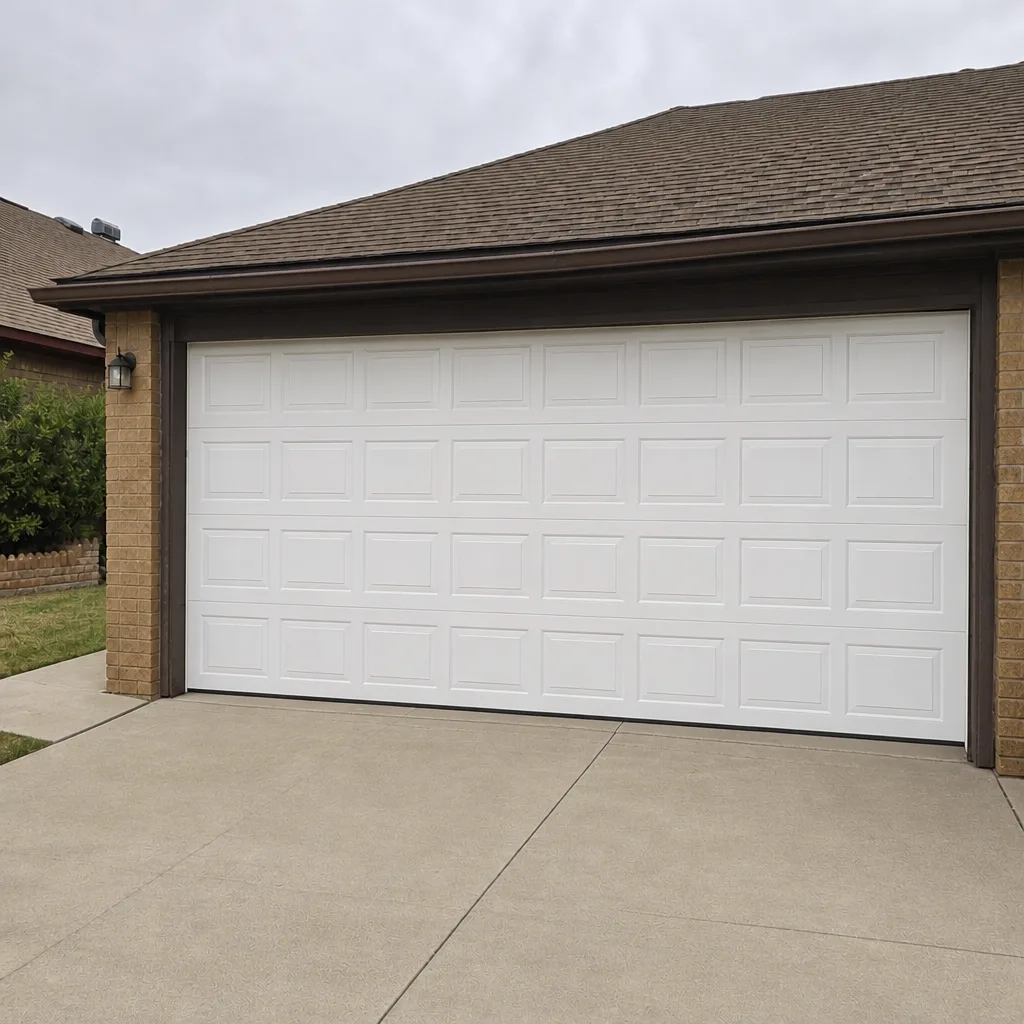
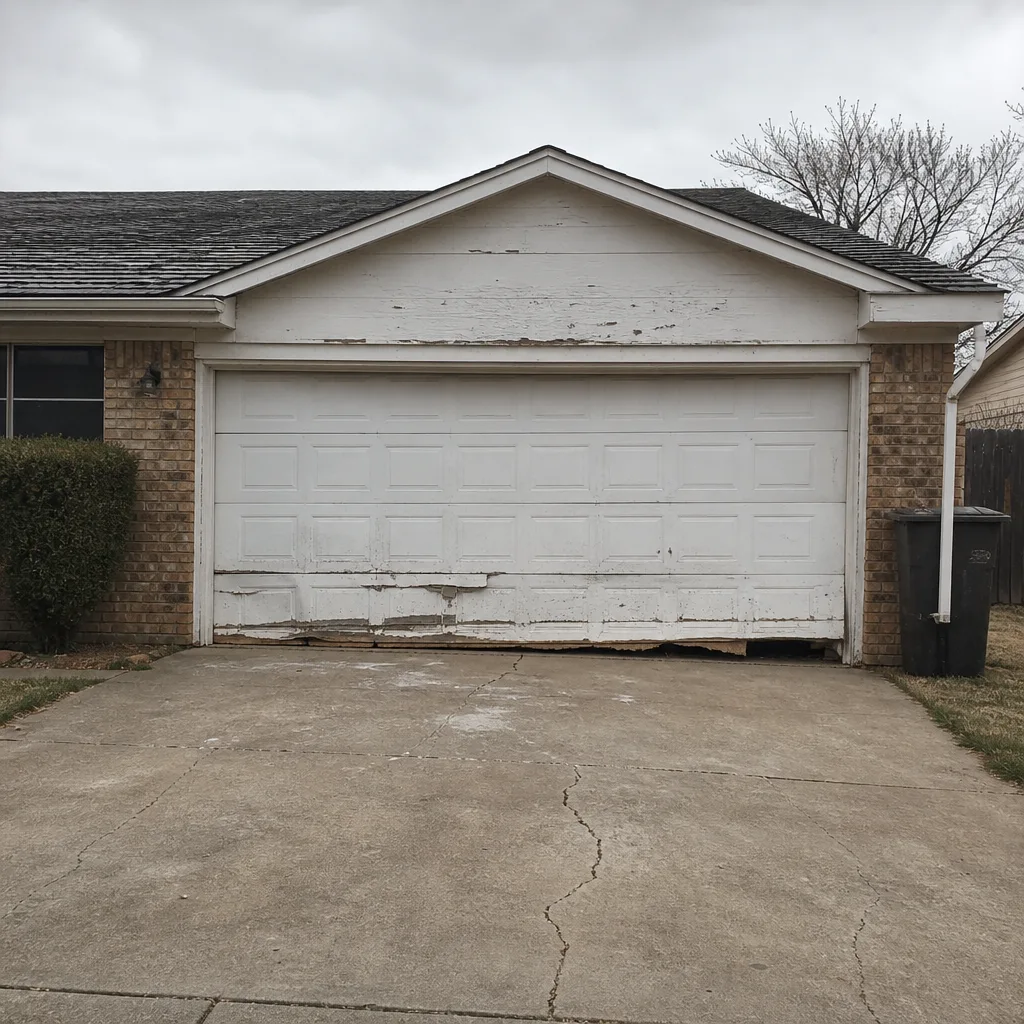
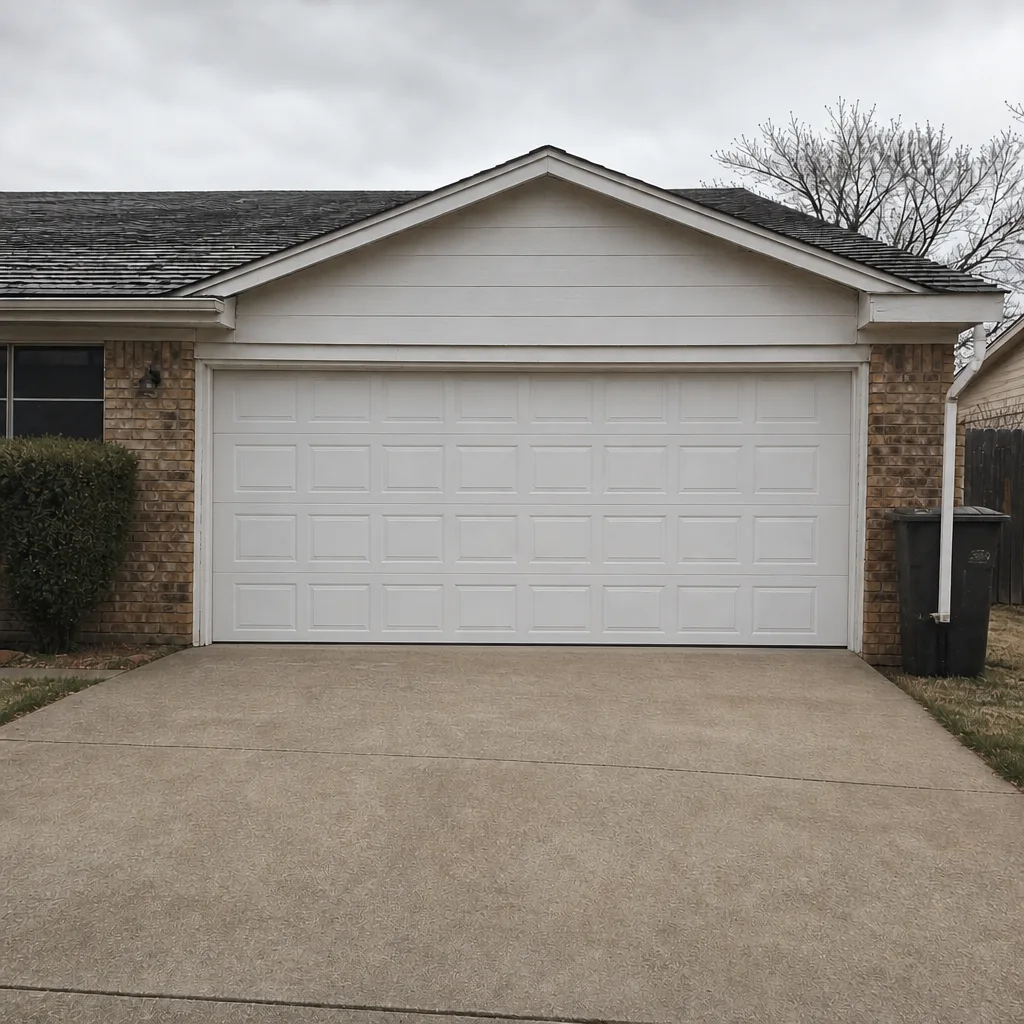
See the difference
 Before
 After
 Before
 After
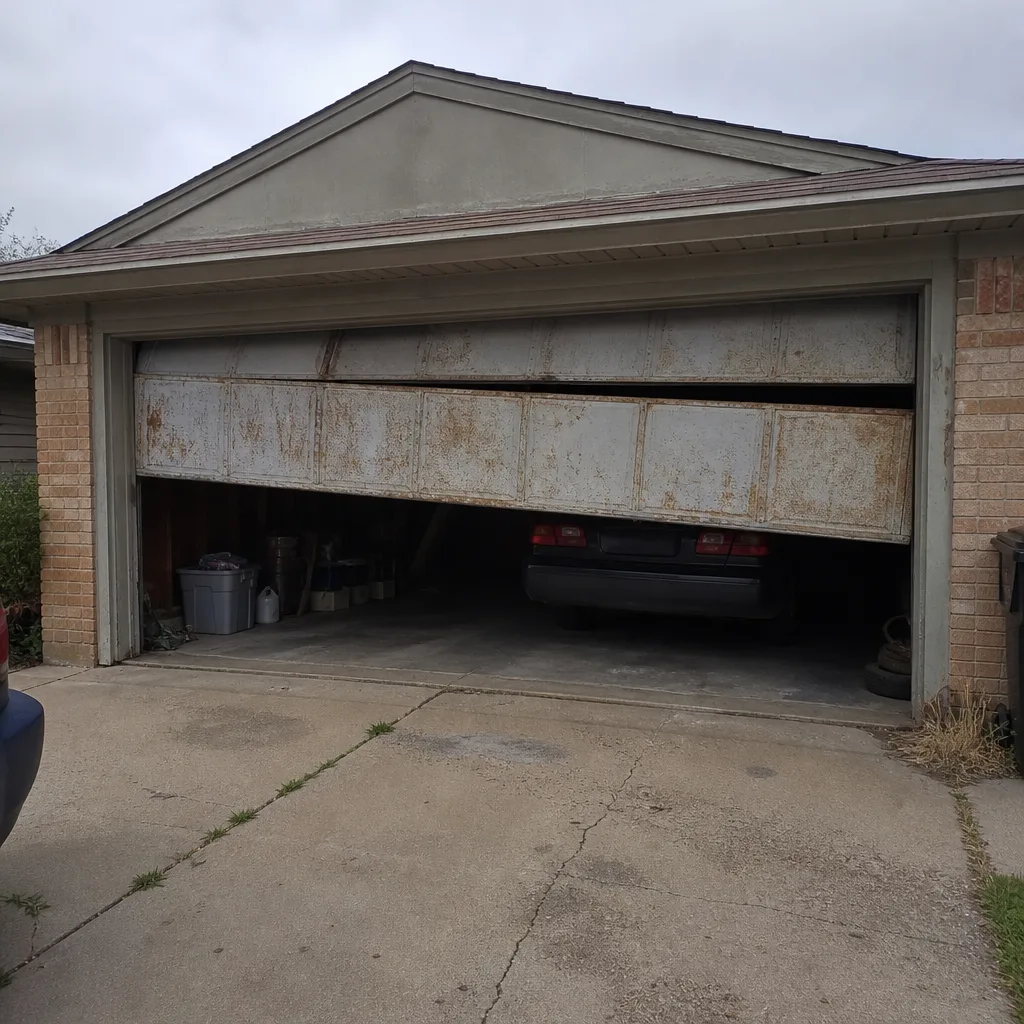 Before
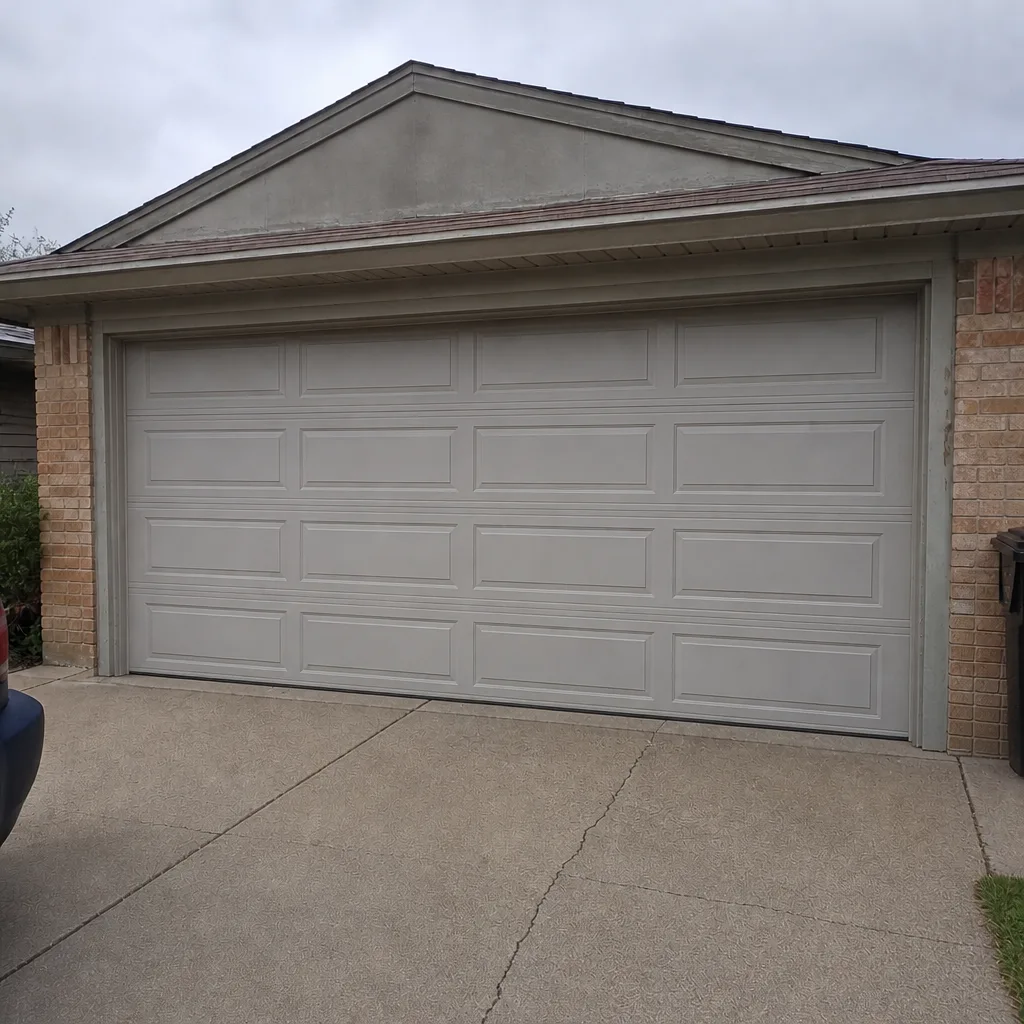 After
When to Call a Professional
Call us when the signs move past maintenance. That means a snapped spring or a door that won’t stay up, a cable that looks slack or frayed, grinding that’s getting louder, a door that binds or reverses, one that sags worse every week, or an opener that runs longer and sounds strained. Also call if you’ve done your monthly check and you’re not sure what you’re looking at. Getting a diagnosis early is always cheaper than getting one later. Dunmore Garage Door Repair offers free estimates in Lubbock. We diagnose before we quote, we work with your existing brand, and the price is set in a written estimate before any work starts. Call (866) 361-7024.
Frequently Asked Questions
The earliest signs are usually noise and movement. A new squeak or grind, a door that moves slower or uneven, a bottom seal that’s crumbly from dust, or an opener that runs a bit longer than it used to. Any single sign is worth watching. A sign that gets worse over a few weeks is worth a call. We answer 24/7 at (866) 361-7024 if you’re not sure.
Dry squeaks and light groans from rollers or hinges usually mean lubrication. Grinding, snapping, popping and hard clunks mean something has failed or is about to. Here’s the test: if the sound is light, comes and goes, and changes after you lubricate the moving parts you can safely reach, it’s maintenance. If it’s loud, gets worse fast, or you can point to where it’s coming from, call and let a professional look. Call (866) 361-7024 for a free estimate.
Not necessarily. Lubbock’s wide temperature swings move the door’s materials, so a small shift is normal. The real test is change over time. If a door that used to sit level is now sagging worse every week, or it binds and won’t settle, it’s a structural sign. A true test is to disconnect the opener safely and see if the door holds at waist height. If it drops fast or resists, the springs need a professional’s look. Call (866) 361-7024.
Yes, often. A tired spring makes the door harder to lift, and an opener on any brand will compensate by running a bit longer or moving a little slower. That slowdown can appear weeks before the door stops working. Don’t replace the opener on that alone. Let us diagnose whether it’s the door or the electronics. Call (866) 361-7024 for a free estimate.
Rust and a worn bottom seal aren’t urgent, but they do get worse with time and Lubbock dust. They’re cheap to deal with early and more expensive once rust reaches the panel. If the door is otherwise working fine, they can be corrected on a maintenance visit. If you’re also hearing a noise or the door binds, that changes it to a call now. Our estimates are free, so call (866) 361-7024.
The technicians who perform the work are licensed and insured professionals, and our team connects you with local experts who handle your brand. Whether you have a LiftMaster, Chamberlain, Genie or another system, the work is diagnostic first. The price is set by a written estimate before any work starts. Call (866) 361-7024. We answer 24/7, with fast dispatch from 7am to 7pm, Sunday through Friday.
The Bottom Line
A garage door rarely fails without warning. It grinds before it breaks, it sags before it binds, and it slows down before the spring gives out. The signals that matter most in Lubbock are dust-packed bottom seals, UV-faded panels hiding small cracks, and rust from hard-water irrigation, alongside the universal sounds and movement changes any door gives you. Run the 60-second check once a month. Treat a changing sound as a message. Handle noises and rust early, and call a professional for springs, cables, and anything that won’t hold. A repair caught early beats a replacement every time.
Dunmore Garage Door Repair works across the full range of major brands, from door mechanics to opener electronics, as one system. We diagnose before we quote, we repair first and replace only when it makes sense, and every price is set in a written estimate before any work starts. Call (866) 361-7024 for a free estimate. We answer 24/7, with fast dispatch from 7am to 7pm, Sunday through Friday.
Written by the team at Dunmore Garage Door Repair.