
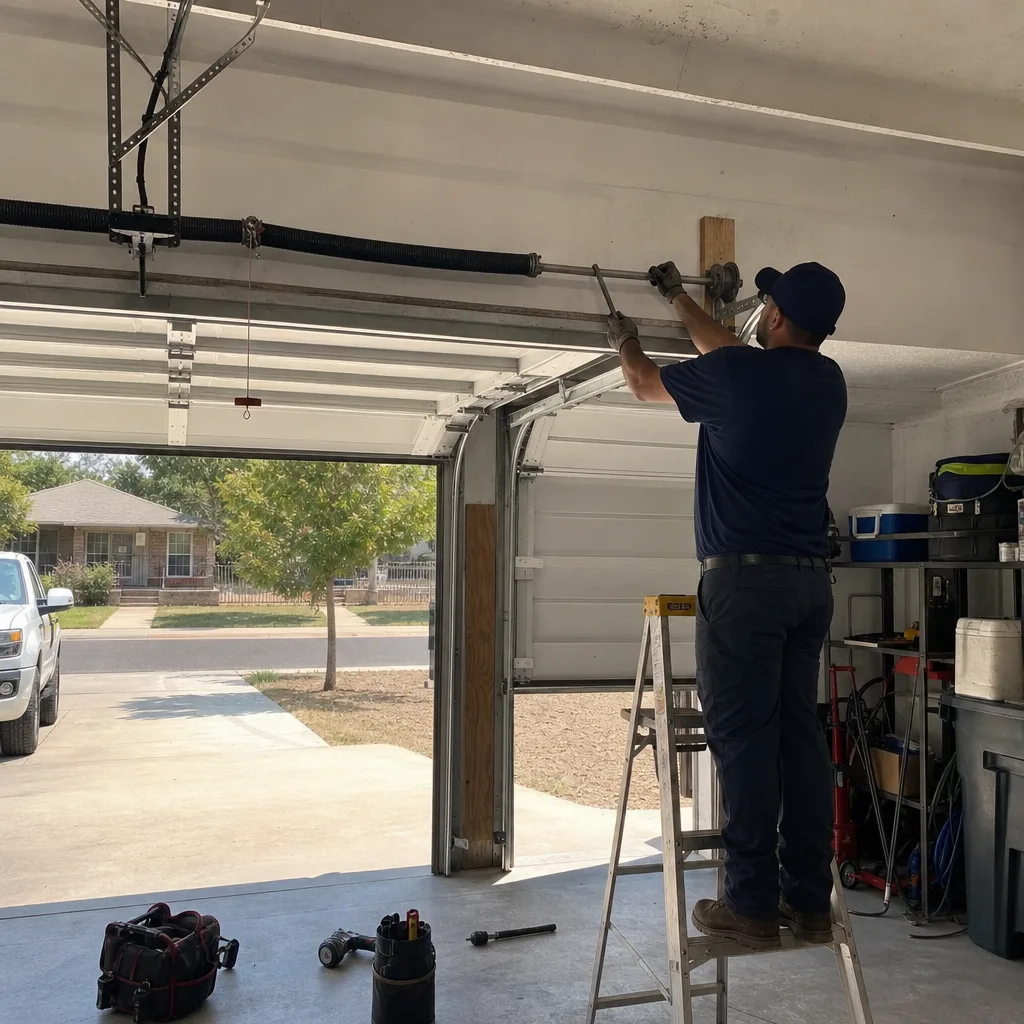
Last updated November 15, 2026
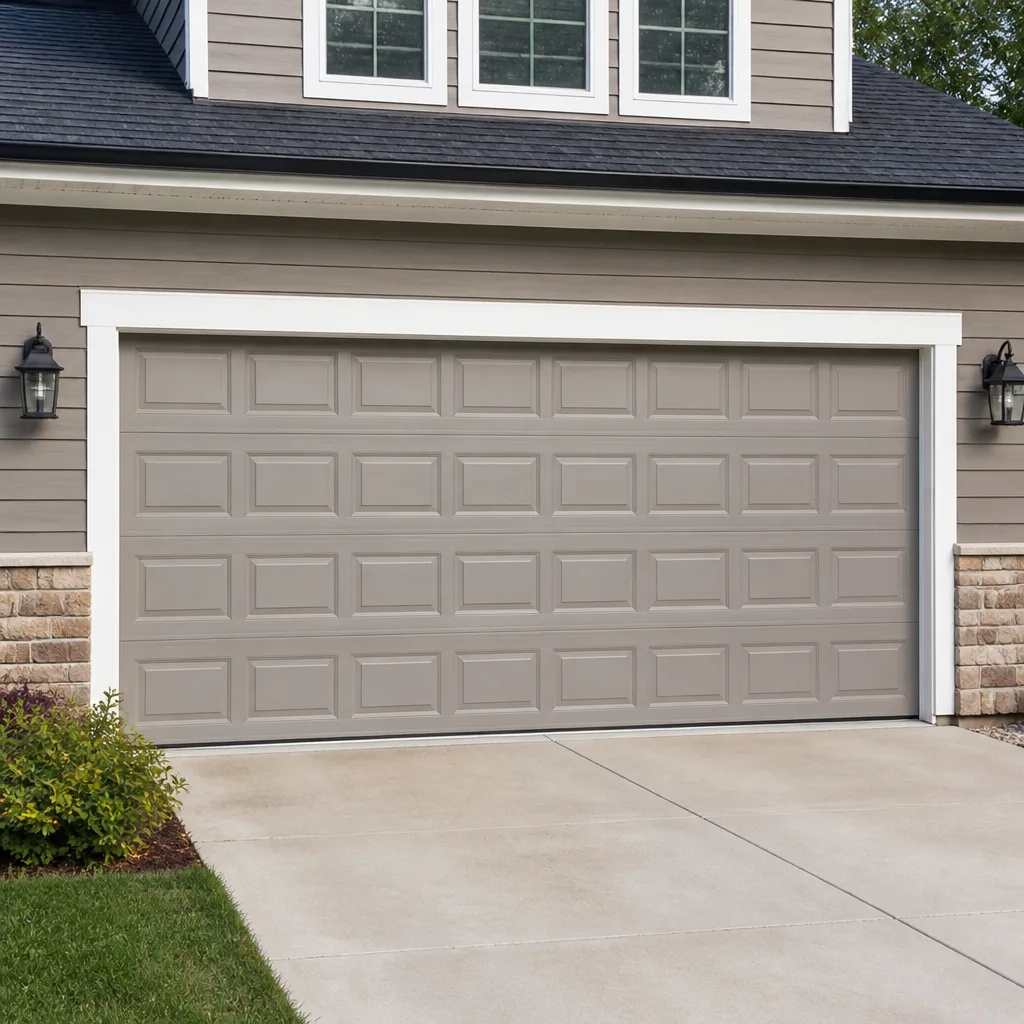 Raised-panel steel
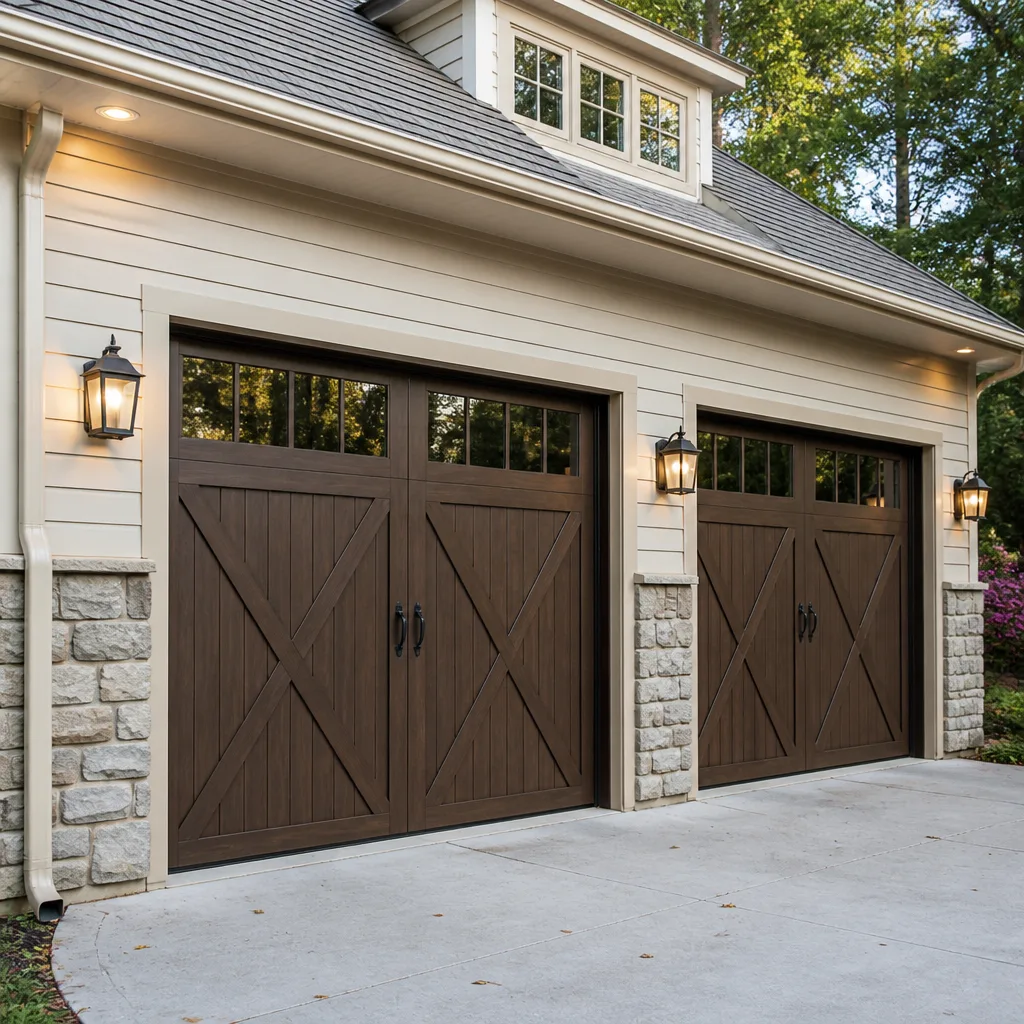 Carriage house
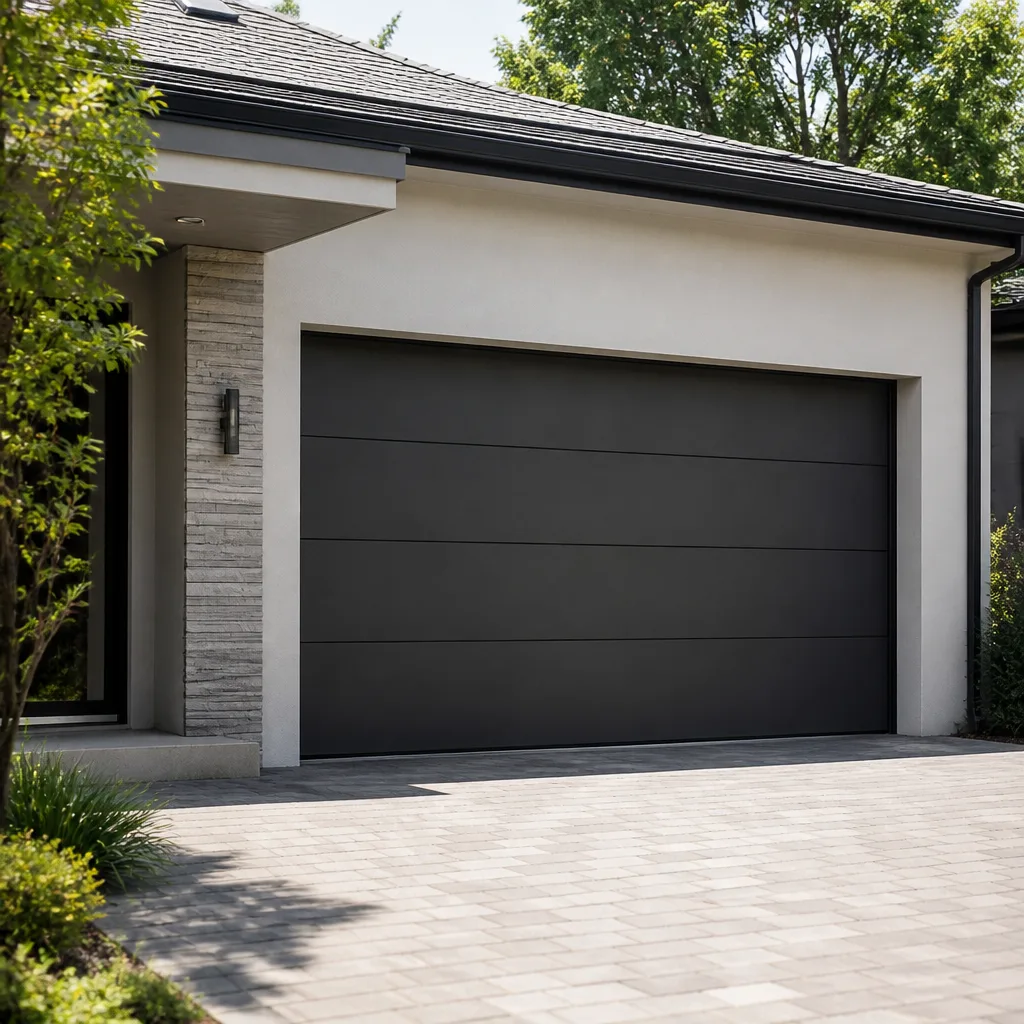 Modern flush
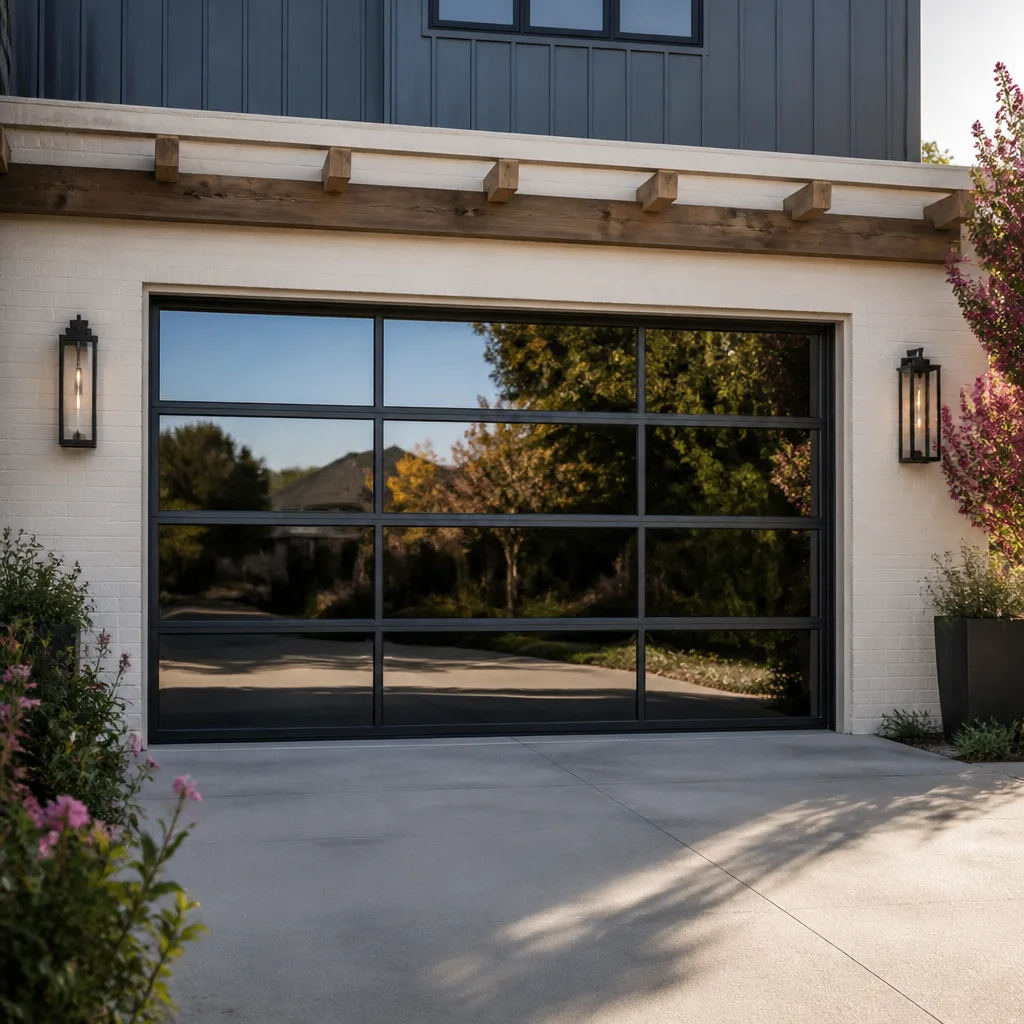 Full-view glass
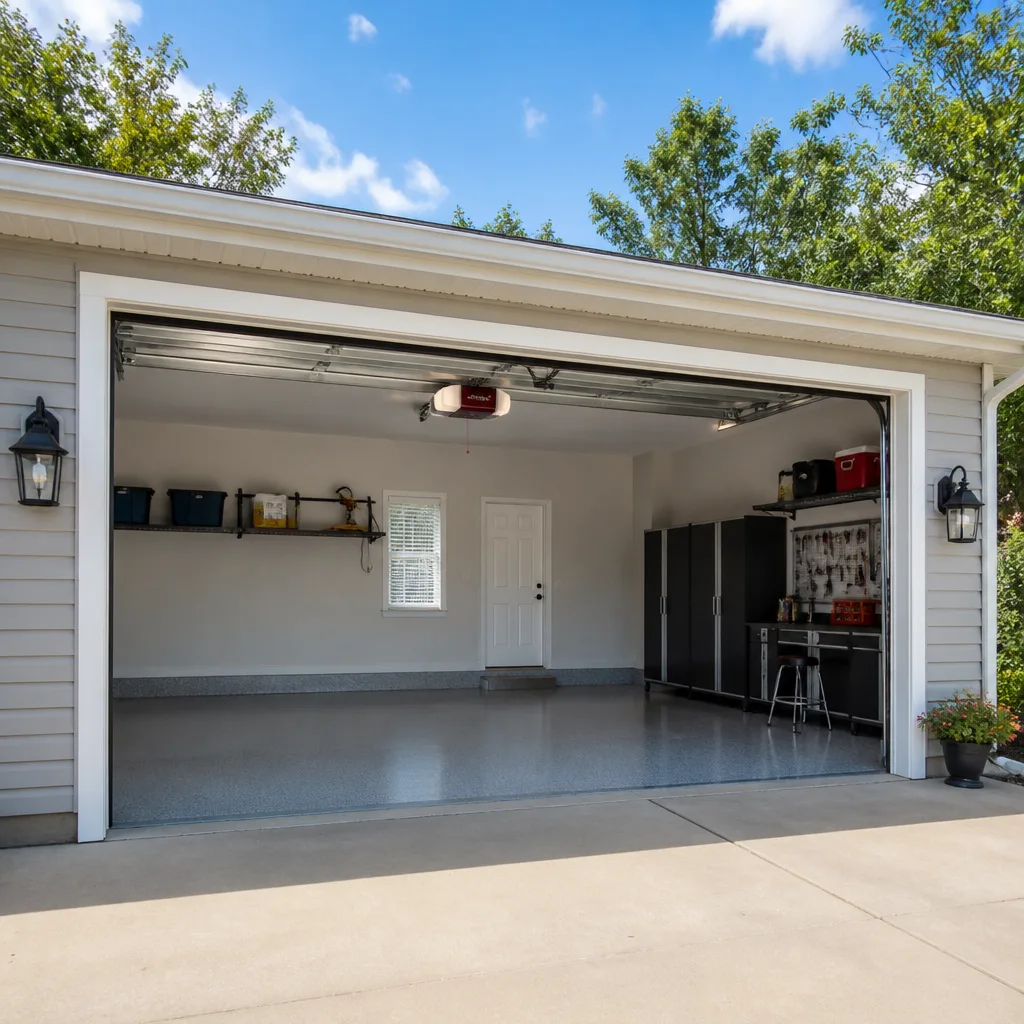 LiftMaster openers
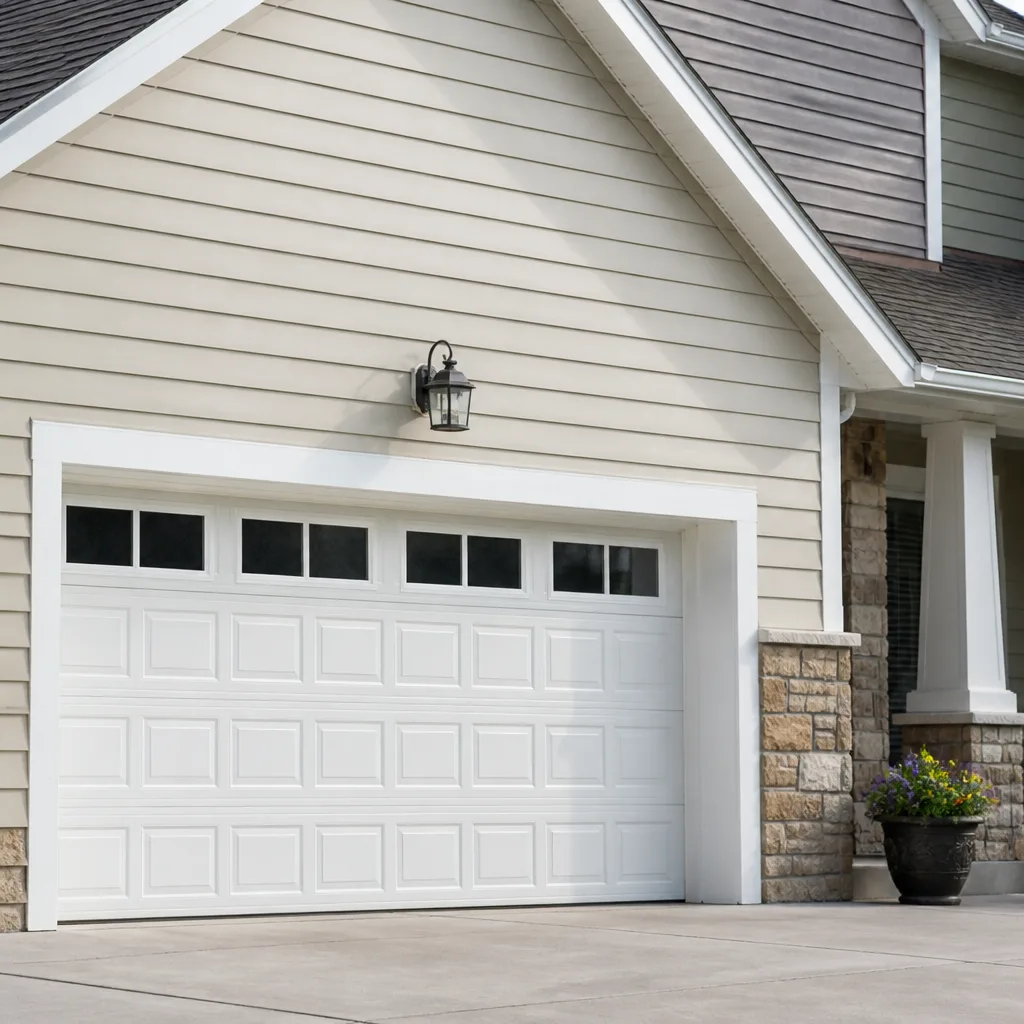 Chamberlain openers
Full 25-point door and opener safety check with every visit - springs, cables, rollers, tracks, and your LiftMaster or Chamberlain opener included
You get a price before we start. It does not change when the pro arrives.
Get your free estimateThe Complete Guide to Garage Doors in Lubbock
Most garage door advice you’ll find online was written for a house somewhere else. It assumes a mild summer, neutral soil, and a door that only opens and closes a couple of times a day. None of that fits Lubbock. Here on the South Plains, a door baked by more than 263 sunny days a year and shaken by wind gusts that routinely hit 40+ mph lives a harder life than the same door in almost any other part of the country. When you buy a door or an opener here, the spec sheet doesn’t tell you the whole story.
This guide is built around what West Texas actually does to doors, springs, and openers over time. We’ll cover how UV degrades panel materials, why wind load should shape your door and track choices, how to match a door to Lubbock’s mix of older ranch homes and newer subdivisions, and which opener drive types survive the heat and dust. Along the way, we’ll flag the decisions that quietly cost homeowners the most.
Quick Answer
A garage door in Lubbock needs to handle intense UV, blowing dust, alkaline air, and hard wind, so material choice, track gauge, and opener drive type matter more here than they do in milder climates. The biggest mistakes are buying a thin, low-insulation door that fades and warps fast, and pairing it with an opener not built for heat and dust. A properly specced door and opener, installed correctly, will run safely for years and cost far less to own over a decade than a cheaper door that fails early.
Styles & brands we work with
- Raised-panel steel
- Carriage house
- Modern flush
- Full-view glass
- LiftMaster openers
- Chamberlain openers
Table of Contents
- How Lubbock’s Climate Affects Your Garage Door
- Panel Materials and UV: What Actually Holds Up
- Wind Load, Door Thickness, and Track Gauge
- Choosing the Right Opener for Heat and Dust
- What a Door Really Costs Over 10 Years in Lubbock
- Matching Door Specs to Lubbock Homes
- A Simple Maintenance Routine for the South Plains
- Springs, Cables, and the Limits of DIY
How Lubbock’s Climate Affects Your Garage Door
Lubbock’s climate puts a garage door through the kind of wear cycle that national spec sheets don’t account for. The combination of over 263 sunny days, sustained wind, blowing dust, and hard summer heat is what drives most of the premature failures we see.
Here’s what each factor does:
- UV exposure: Sun breaks down the surface of paint and the polymers in some panels. Colors fade, and on lower-grade steel the finish can chalk and oxidize. On wood and composite doors, UV causes cracking and checking if the finish isn’t maintained.
- Heat: When a door sits in direct sun, the metal surfaces get far hotter than the air temperature. That heat cycles the steel, working the paint and, over years, the hinges and rollers. It also stresses the opener, which is mounted in a hot ceiling cavity.
- Blowing dust: The South Plains sit in a dusty, windy environment, and dust gets into tracks, hinges, rollers, and opener mechanisms. Left unattended, it becomes an abrasive paste that speeds wear.
- Alkaline air and soil: Lubbock’s caliche soil is highly alkaline, and that alkalinity also shows up in the air as dust. Alkaline dust is tough on painted surfaces and accelerates corrosion on unprotected hardware like hinges, brackets, and bottom seals.
- Wind: The door is one of the largest single surfaces on your house, and every gust pushes against it. Wind load is a structural concern, not a cosmetic one.
If you’ve noticed your door looking dull, sticking, or noisier than it used to be, those are usually early climate-wear signals. Our garage door repair team can pinpoint what’s failing before it becomes a bigger repair.
Panel Materials and UV: What Actually Holds Up
UV is the quiet factor that shortens the life of a cheap door in Lubbock. Manufacturer warranties typically don’t cover surface fading or chalking, so the door you bought as a budget choice can look tired years before its mechanical life is over.
Here’s how the common panel materials compare in this climate:
- Steel: The most common choice, and a solid all-rounder if the finish is good. A standard 24-gauge steel door holds up well, but very thin 27- or 28-gauge doors dent easily and can fade faster. A premium baked-on finish resists UV better than an economy paint job.
- Aluminum: Light and rust-resistant, but softer. Good for lighter doors, less ideal if wind or impact is a concern.
- Wood and wood composite: Beautiful and can be sturdier than steel, but they demand more finish maintenance. In Lubbock’s sun, a wood door needs regular sealing and painting to survive. Skip that and it cracks and checks.
- Fiberglass and vinyl: Some fiberglass doors can chalk or yellow under sustained UV unless they carry a good UV-resistant finish. Vinyl holds color well but can be more heat-sensitive.
The practical takeaway: a mid-grade steel door with a strong factory finish usually holds up best for the money in a Lubbock climate. If you want wood, budget for maintenance from the start. If you’re weighing a new door, our team installs across major manufacturers like Clopay, Amarr, and Wayne Dalton, so we can help you compare specs rather than push a single brand.
Wind Load, Door Thickness, and Track Gauge
Wind is a structural factor in West Texas, and it should shape your door and track choices. A garage door is a big flat sail, and on a breezy day it takes a beating. Over years, that beating is what bends tracks, wears rollers, and dents thin panels.
What to think about:
- Door thickness and weight: A heavier, more rigid door with a deeper panel profile resists wind deflection better. It also keeps a tighter seal against dust and heat.
- Track gauge: Thicker track is stiffer. A flimsy track is one of the first things to bend in wind, and a bent track makes the door jump, stick, and pull on the opener. Thicker track and heavier rollers cost a little more and last far longer here.
- Reinforcement: If you have or plan to add an opener, ask about a reinforced top section or strut. That section takes the pull of the opener and wind stress together.
- Weather seal and bottom seal: A tight bottom seal keeps out the dust and holds the door steady. It also reduces rattling in the wind.
Most cities have rules on garage doors and structural attachments, and wind-related requirements vary. If you’re replacing a door or adding reinforcement, ask your city’s building department whether a permit applies before work begins. A door specced for wind isn’t a luxury here; it’s the difference between a door that runs smoothly for years and one that’s always out of adjustment.
Choosing the Right Opener for Heat and Dust
Heat and dust are the two conditions that decide whether an opener lasts in Lubbock. The garage ceiling cavity gets hot in summer, and every cycle pulls in dusty air. An opener that handles that environment well will outlast a cheaper unit that doesn’t.
Drive types, compared:
- Belt drive: The quietest option and a strong choice if you have living space above or beside the garage. A quality belt holds up in heat, though cheap belts can harden and stretch over time.
- Chain drive: Durable and proven in harsh conditions. It’s louder than belt, but it handles heat and heavy cycles well. A solid choice if quiet isn’t the priority.
- Belt-and-rail or screw drive: Screw drive is smooth and handles heavy doors. It needs more careful maintenance in a dusty environment because grit can work into the threads.
Beyond the drive type, three details matter here:
- Safety sensors: These get bumped and misaligned, and dust can coat the lenses. If your door reverses or won’t close, a dirty or shifted sensor is often the cause.
- Logic board and heat: A hot ceiling cavity stresses the control board. Boards on lower-tier brands are the most common opener failure we diagnose, and they’re often blamed for a whole opener that just needs a board replaced.
- Smart-home and remotes: If you want an opener that connects to your phone, check the brand’s app support and remote compatibility before you buy. A smart opener isn’t useful if the remotes and sensors don’t match.
We service LiftMaster, Chamberlain, Genie, Craftsman, Raynor, and other major brands, and opener repair is a dedicated service line for us, not a side job. If your opener is misbehaving, our garage door opener repair team can diagnose the board, sensors, and drive before anyone recommends a new unit.
What a Door Really Costs Over 10 Years in Lubbock
A cheap door and a good door often cost the same to buy. They don’t cost the same to own. In a Lubbock climate, the gap gets wider, because UV and wind chew through the weak points of an economy door faster.
Line-item estimates for a typical residential door in Lubbock:
| Item | Typical estimated range |
|---|---|
| Economy single-car steel door, installed | Low end of the market, thin panels and basic hardware |
| Mid-grade insulated steel door, installed | Moderate; better finish and hardware |
| Premium insulated door, installed | Higher; stronger panels, heavier hardware |
| Opener replacement, installed | Varies by drive type and brand |
| Spring replacement (one spring) | Per spring; a matched pair costs about twice one |
The better comparison is not the purchase price but what each door needs over ten years. On an economy door in this climate, you’re more likely to face:
- Faded or chalking panels that can’t be restored without refinishing or replacing sections
- Bent tracks and worn rollers from wind and thin hardware
- A louder, rougher door that strains the opener and leads to earlier opener replacement
A mid-grade door with better finish and heavier track often needs little more than routine maintenance across the same period. That’s the part national “average cost” tables miss. All our prices are estimates, and the written quote sets the final price before any work starts. Estimates are free. Call (866) 361-7024 for an exact quote on your door.
Matching Door Specs to Lubbock Homes
The right door for a 1950s ranch home isn’t the same as the right door for a house in a newer master-planned neighborhood. Lubbock has both, and each has its own garage realities.
Older ranch-style homes often have single-car or two-car garages with lower ceilings, narrower openings, and 16-inch or 15-inch center spacing on framing. Doors on these homes can be decades old, and the springs and hardware may be due for replacement. If the home has original wood framing around the garage, check for rot and settling before you order a new door, because the opening itself determines what will fit.
Newer neighborhoods on the south and west sides often feature wider two-car and three-car garages with higher ceilings and tighter energy expectations. Here, an insulated door and a quiet belt-drive opener tend to be the right fit, especially when the garage sits next to a living area.
What to match:
- Opening size and headroom: Measure before shopping. Most homeowners are surprised how much door size varies.
- Insulation: If the garage shares a wall or ceiling with living space, an insulated door makes a real difference in summer heat.
- Style: Ranch homes often suit traditional raised-panel looks, while newer homes can carry carriage-house or contemporary styles.
- Hardware finish: Alkaline dust and sun are hard on cheap hardware. Stainless or coated hinges and rollers last longer.
We install doors from Clopay, Amarr, and Wayne Dalton and can compare options side by side without pushing one brand. If you’re in a newer part of Lubbock or restoring an older home, the right spec is the one that fits your opening and your climate, not the one on a showroom floor.
A Simple Maintenance Routine for the South Plains
A ten-minute check twice a year prevents most climate-driven failures here. Dust and heat are the main culprits, so the routine focuses on keeping moving parts clean and lubricated.
- Wipe and lubricate tracks: Dust builds up in the tracks. Wipe them out and apply a proper garage door lubricant, not grease that collects grit.
- Check hinges and rollers: Look for worn rollers and loose hinges. Replace cheap rollers with sealed or nylon ones that hold up to dust.
- Test the balance: Disconnect the opener and lift the door halfway by hand. It should stay put. If it drops or is heavy, the springs need attention.
- Test the safety reverse: Put a small object in the door’s path and confirm it reverses. Then check the sensors are clean and aligned.
- Inspect the seals: The bottom seal keeps dust and heat out. Replace it if it’s cracked or letting wind through.
- Look at the finish: On sun-facing doors, check for fading, chalking, or cracking. Touch up paint or re-seal wood before UV does permanent damage.
- Listen and watch: New rattles, grinding, or a door that stops partway are warning signs. Note them and have them checked.
If something doesn’t feel right, stop using the door and have it looked at. A door that’s out of balance puts stress on the opener and the springs, and that turns a small repair into a bigger one.
Springs, Cables, and the Limits of DIY
Torsion springs and cables are under extreme tension, and they’re the most dangerous part of any garage door. A spring can release suddenly and with enough force to cause serious injury. Never attempt to adjust, remove, or replace a spring or cable yourself. This is not a job for a homeowner with a YouTube video. The same caution applies to opener electrical work and the door’s structural attachments. Leave it to trained technicians.
What you can safely do is watch and listen:
- A door that slams down or feels very heavy when lifted by hand points to a spring issue. Stop using it.
- A door that goes up crooked, or a cable that looks slack or frayed, needs professional attention.
- Grinding or a door that reverses for no reason can be a sensor or logic board problem. A trained technician can tell the difference quickly.
Our technicians have up to 13 years of experience diagnosing exactly these problems, and we check the whole system, springs, cables, tracks, and opener, so a fix doesn’t create a new issue somewhere else. If you’re unsure whether something is urgent, call us and describe it. We’ll tell you what to do.
Common Mistakes to Avoid
- Buying a thin door to save money: The cheapest door on the shelf often fades, dents, and wears out early in Lubbock’s sun. The upfront saving disappears over ten years in repairs and replacement.
- Skipping the insulation: If your garage shares a wall with the house, an uninsulated door makes the garage hotter and your AC work harder all summer.
- Ignoring the track: A bent or flimsy track is one of the first things wind damages. Homeowners often replace the door and keep the weak track, then wonder why the new door still binds.
- Greasing the tracks: Dust sticks to grease. Use a proper door lubricant on the moving parts and leave the tracks clean and dry.
- Replacing an opener when only the board is bad: Many openers that seem dead just need a logic board, sensor, or remote fix. Diagnosis first saves real money.
- DIY spring work: This is the single most dangerous garage door mistake. Springs and cables are under tension and can injure you. Call a professional.
- Skipping maintenance in dry, dusty seasons: Dust and heat wear parts faster here. A twice-yearly check is the cheapest insurance you can buy.
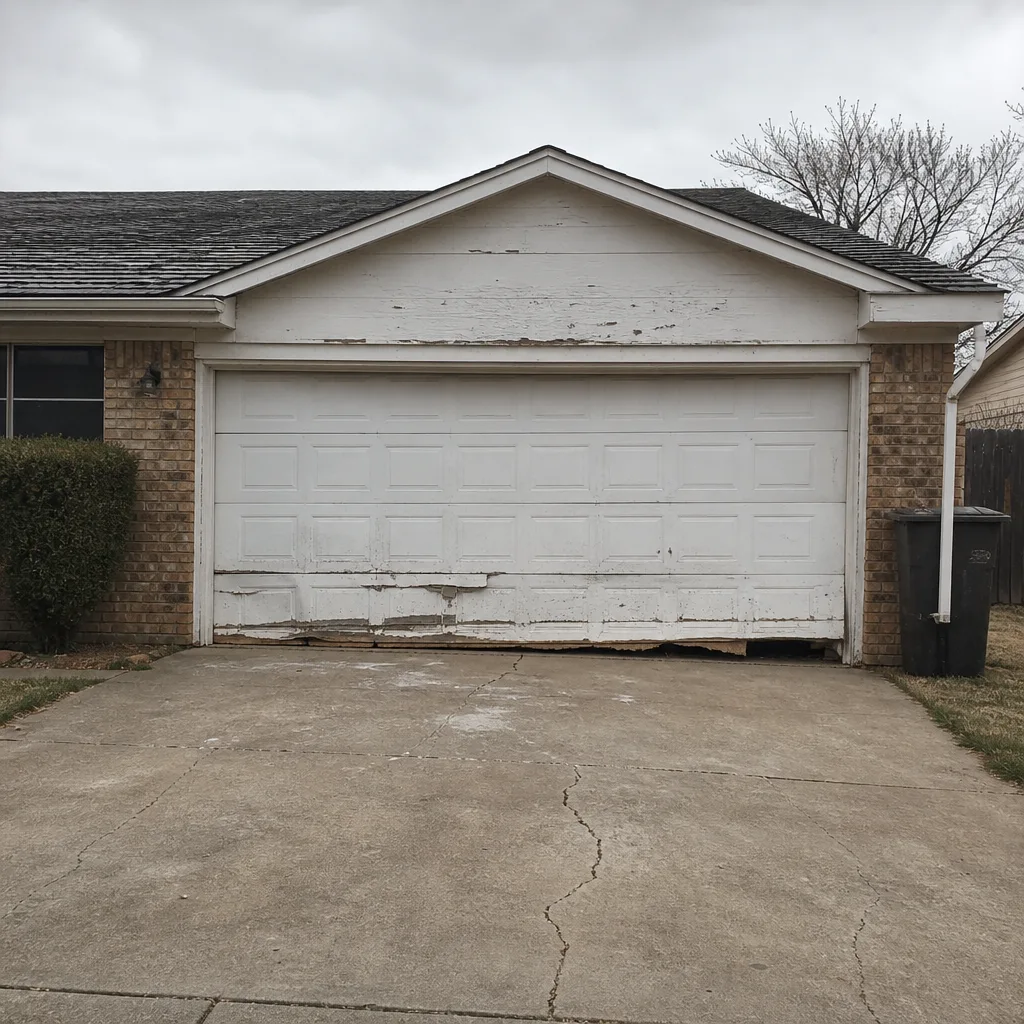
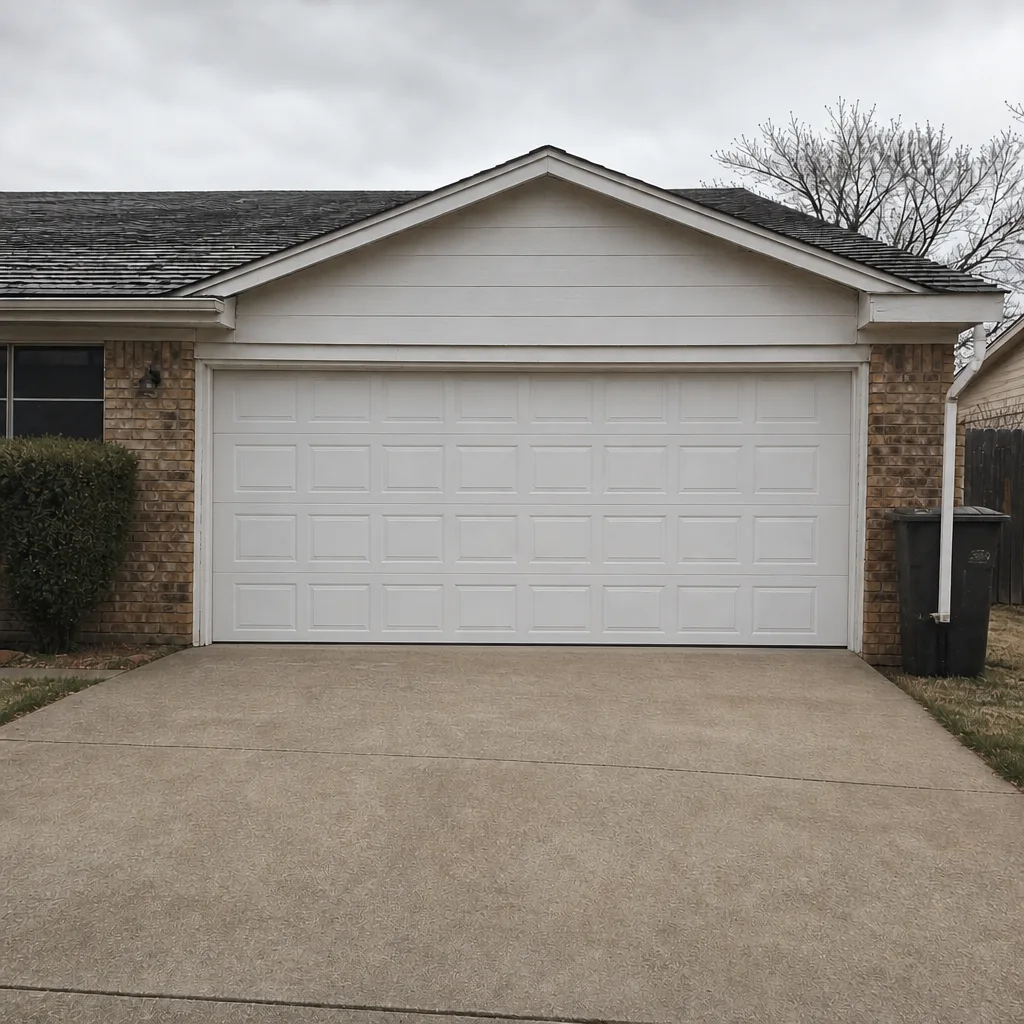
See the difference
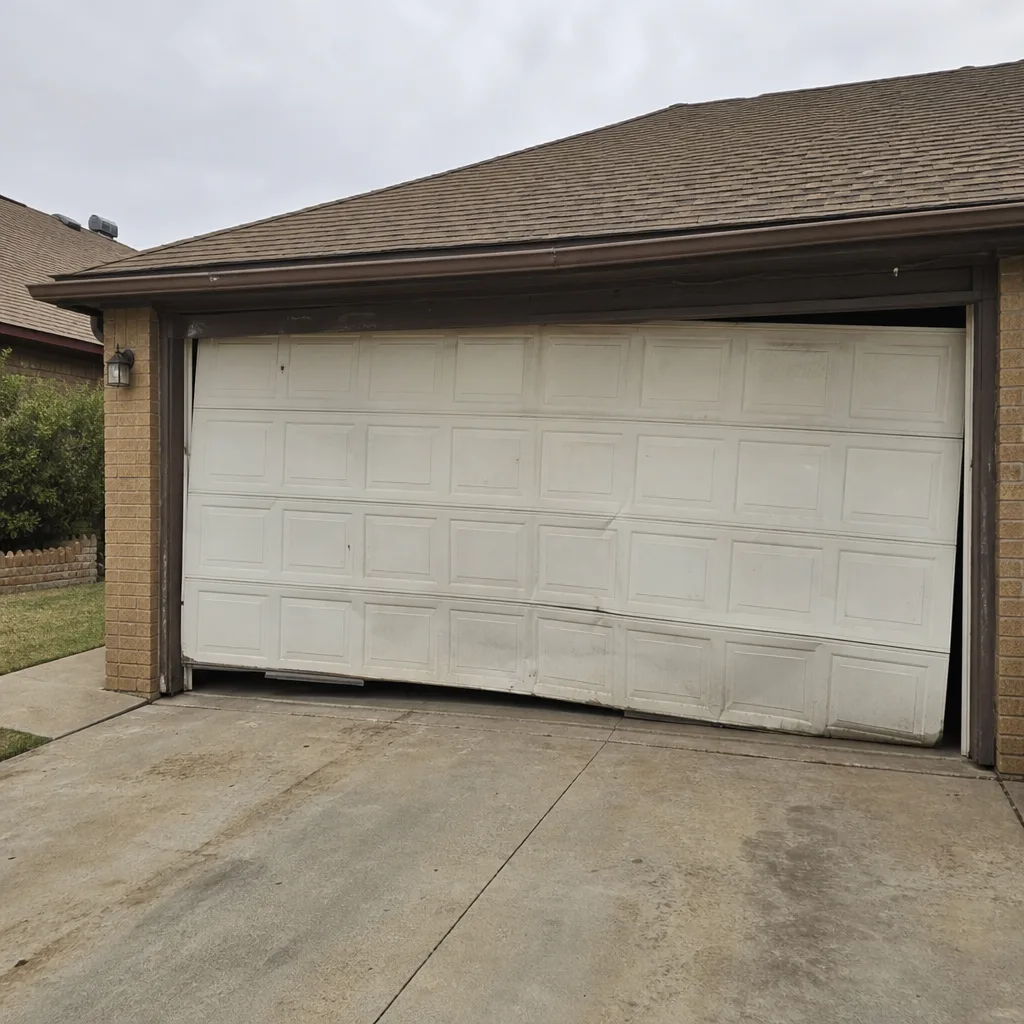 Before
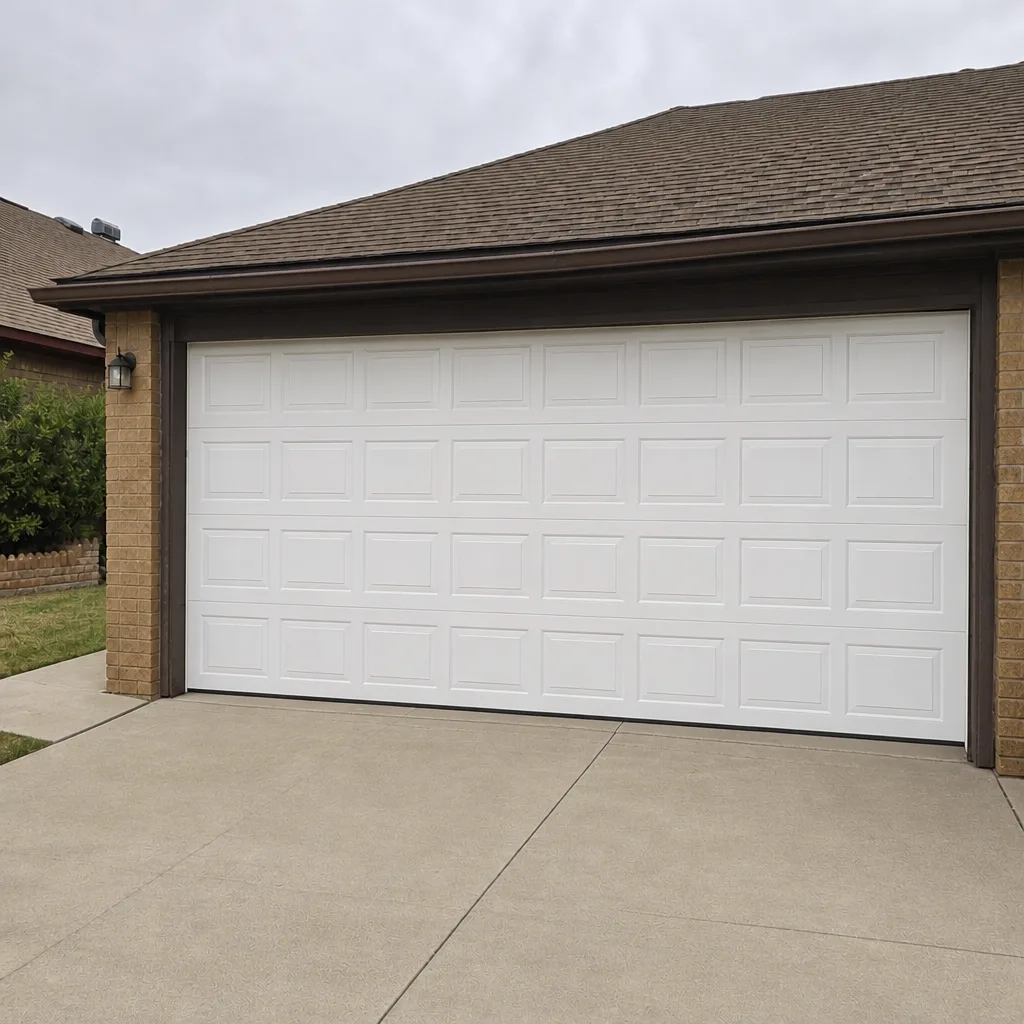 After
 Before
 After
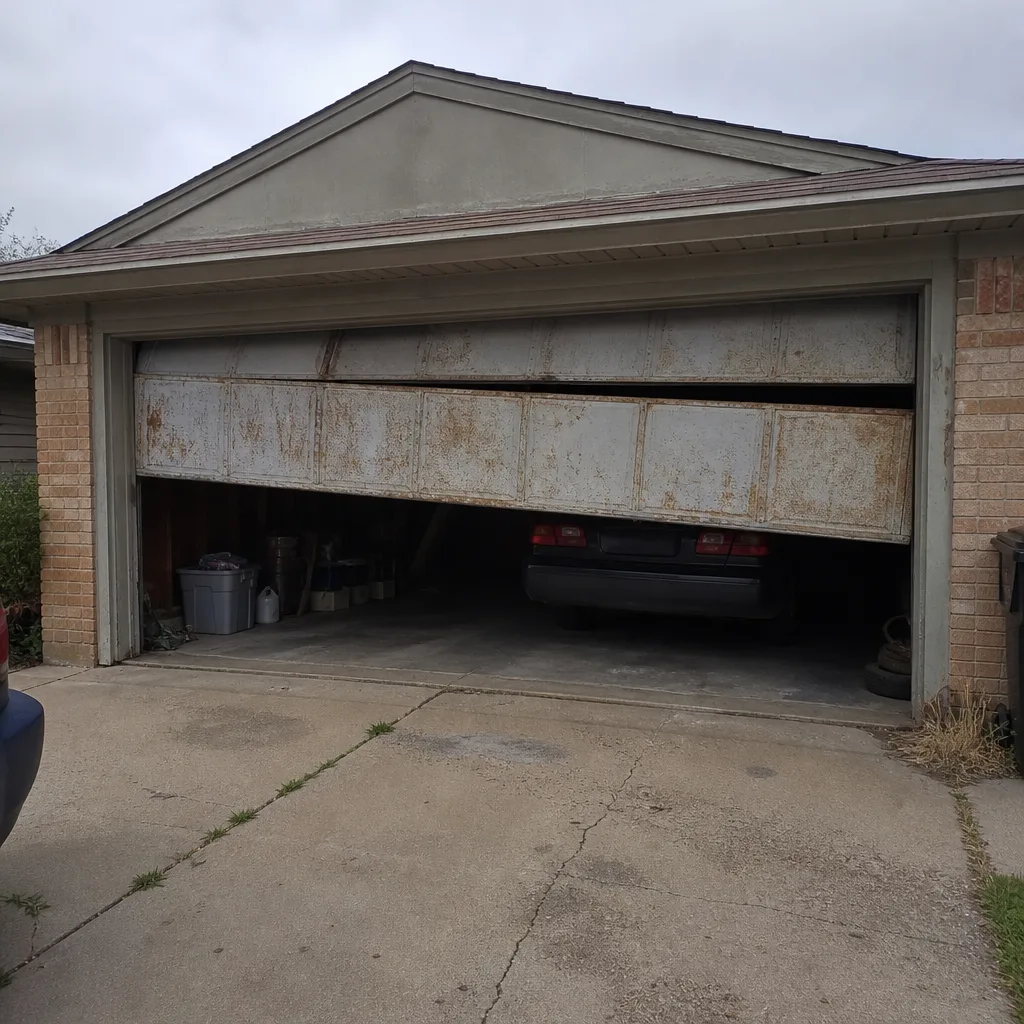 Before
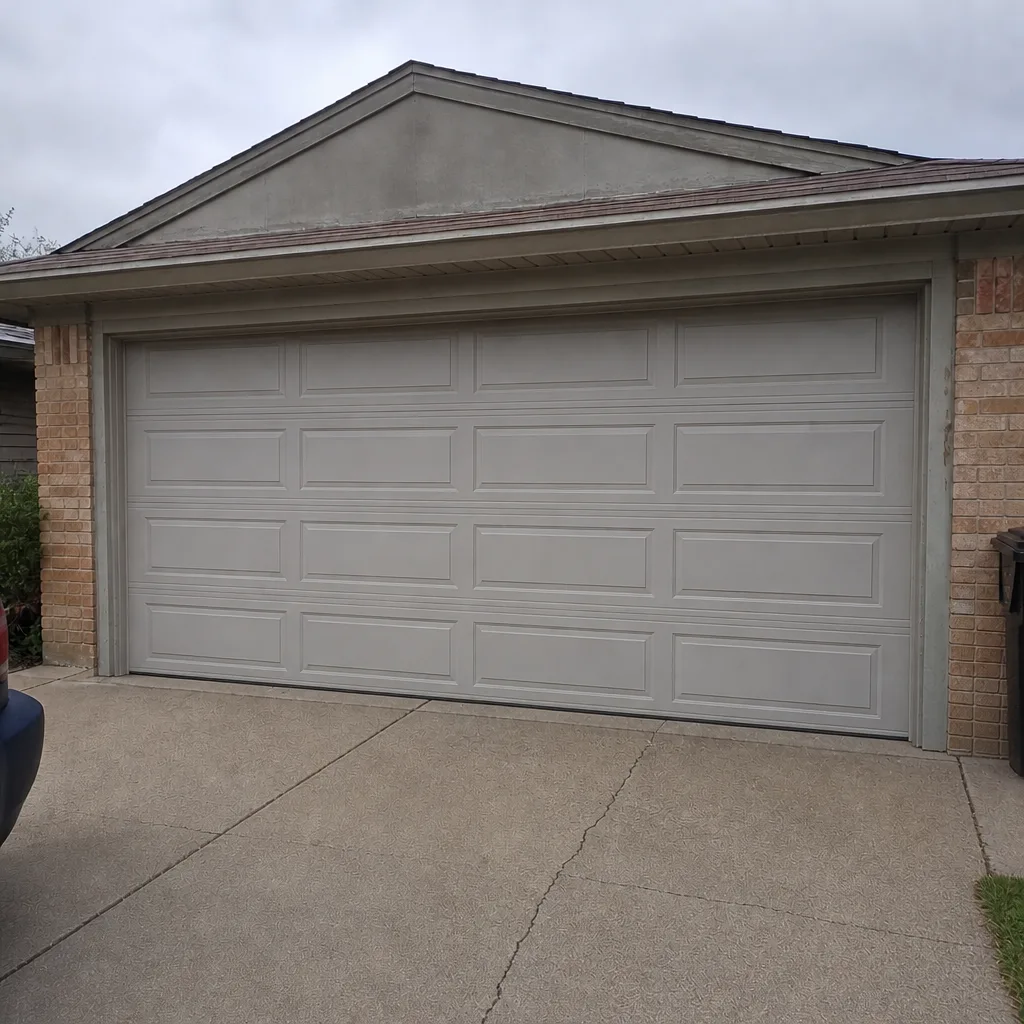 After
When to Call a Professional
Some garage door problems are safe to handle yourself. Others are best left to a trained technician. Call a pro if your door won’t open or close, if it reverses or stops partway, if it’s heavy when lifted by hand, or if a spring or cable looks broken, slack, or frayed. Call if you hear grinding or a loud bang, if the door goes up crooked, or if the opener runs but nothing moves. If a door is out of balance or the tracks are bent, don’t force it. Get it looked at. In Lubbock, Dunmore Garage Door Repair offers free estimates, so you know the cost before any work starts. Call (866) 361-7024. We answer 24/7. Fast dispatch from 7am to 7pm, Sunday through Friday.
Frequently Asked Questions
A mid-grade insulated steel door with a strong factory finish holds up best for the money, because it resists UV fading and wind deflection better than thin economy panels. Wood doors look great but need regular sealing against the sun. Whichever you choose, heavier track and quality hardware matter as much as the door itself.
Belt drive is the quietest and a strong choice for homes where the garage sits near living space, while chain and screw drive handle heavy cycles well. Whatever the drive type, the deciding factors are a quality logic board, clean sensors, and regular lubrication in a dusty environment. Opener repair is a dedicated service for us, so we can diagnose the issue before recommending a replacement.
Costs vary by the job, but spring replacement is typically quoted per spring, and a matched pair costs about twice a single spring. Opener and hardware repairs are quoted based on the diagnosis. We give a free estimate and a written quote before any work starts, so you know the price up front. Call (866) 361-7024 for an exact quote.
We’re certified to service eight major brands, including LiftMaster, Chamberlain, Genie, Clopay, Craftsman, and Raynor, so we can work on virtually any residential system. Whether you have a LiftMaster or a Genie, we know the system. If your brand isn’t on the list, call us and we’ll let you know.
Wind is a structural load on the door, and repeated gusts bend thin tracks and dent thin panels over time. Heavier doors, thicker track, and a reinforced top section resist wind deflection better. If your door rattles or binds in the wind, have the track and hardware checked.
Start with the safety sensors: clean the lenses and check they’re aligned, since two-thirds of no-close problems come from misaligned sensors. If the sensors are fine and the door still won’t close, the logic board or a track problem is likely. A trained technician can identify the cause quickly. Call (866) 361-7024 for a free estimate.
The Bottom Line
The garage door decisions that matter most in Lubbock are shaped by local conditions: hard UV, blowing dust, alkaline air, and strong wind. A mid-grade insulated steel door with strong finish and heavy track usually gives the best value over ten years. Pair it with an opener rated for heat and dust, keep the moving parts clean, and get springs and cables checked by a pro. Our team at Dunmore Garage Door Repair services all the major brands and handles repair, opener repair, and installation. If your door is due for work, call (866) 361-7024 for a free estimate and a written price before anything begins.
Written by the team at Dunmore Garage Door Repair.